

Lean Six Sigma Green Belt (LSSGB) is the premier certification for professionals leading process improvement projects. This guide details the DMAIC framework, compares key accrediting bodies like IASSC and ASQ, and outlines the 40-hour training path to achieve an average salary uplift of 18% in 2026. Master the tools to drive measurable business results.
Save 15% on any Instructor-Led Live Online Training course, worldwide, with code HOLIDAYS15. Valid until 31 December 2026, 11:59 pm Pacific Time. See courses and savings
What is Lean Six Sigma Green Belt? The 2026 Process Optimizer’s Toolkit
A Lean Six Sigma Green Belt (LSSGB) certification signifies a professional's proficiency in improving business processes by systematically removing waste and reducing variation. Green Belts are the engine of a Lean Six Sigma program, acting as part-time project leaders and team members who apply the DMAIC (Define, Measure, Analyze, Improve, Control) methodology to solve quality and efficiency problems. Unlike their Yellow Belt counterparts who possess foundational knowledge, Green Belts are equipped to lead smaller-scale improvement projects independently within their functional areas. They collect data, perform statistical analysis, and implement changes that directly impact an organization's bottom line.
In the business landscape of 2026, the Green Belt role has become indispensable. Companies across all sectors - from manufacturing and healthcare to finance and IT services - rely on Green Belts to drive operational excellence from the ground up. These practitioners are not just theoretical experts; they are hands-on problem solvers who use a specific toolkit of Lean (waste reduction) and Six Sigma (quality improvement) methods to achieve tangible results. The certification validates one's ability to speak the language of data, manage project stakeholders, and deliver sustainable improvements, making it a critical credential for any professional serious about career growth in operations, quality, or management.
Our curriculum, as an International Association for Six Sigma Certification (IASSC) Accredited Training Organization (ATO), is structured to build this capability methodically. The training focuses on empowering you to execute the DMAIC framework with confidence. You learn not just the 'what' but the 'why' behind statistical tools and Lean principles. This ensures that our alumni do not just pass an exam; they emerge as competent process improvement leaders ready to tackle real-world challenges, leading projects that can save organizations hundreds of thousands of dollars annually by optimizing resource use and enhancing customer satisfaction.
Green Belt vs Black Belt: at-a-glance
Which belt matches your current role and project scope.
| Dimension | Green Belt | Black Belt |
|---|---|---|
| Time commitment | 40 to 60 hrs training + 1 project | 160 to 200 hrs + 2 projects |
| Statistical depth | Basic DMAIC + hypothesis testing | Full DoE, MSA, advanced regression |
| Typical project savings | $50k to $100k | $250k+ per project |
| Cost (indicative) | $800 to $1,800 | $2,500 to $4,500 |
| Salary uplift | 12 to 18% | 20 to 30% |
Green Belt vs. Other Belts: Defining Your Role in the Hierarchy
The Lean Six Sigma belt system creates a clear hierarchy for expertise and project responsibility, ensuring that improvement initiatives are appropriately resourced and led. At the foundational level, Yellow Belts possess a basic understanding of Lean Six Sigma concepts. They are valuable team members on Green or Black Belt projects, contributing to data collection and process mapping, but they do not lead projects themselves. Their training is typically shorter, focusing on the core vocabulary and the 'Define' and 'Measure' phases of DMAIC from a supportive standpoint.
The Green Belt stands as the first tier of project leadership. A certified LSSGB professional has a deep understanding of the entire DMAIC cycle and is capable of leading small to medium-sized improvement projects within their own department or business unit. They spend a significant portion of their time - typically 20-30% - on these initiatives. Their projects solve problems with known solutions but require rigorous data analysis to prove their effectiveness. For example, a Green Belt might lead a project to reduce invoice processing errors in an accounting department or decrease patient wait times in a specific hospital clinic.
At the top of the project leadership hierarchy sits the Black Belt. Black Belts are full-time process improvement experts who lead complex, cross-functional projects that tackle major strategic challenges. Their statistical knowledge is more advanced than a Green Belt's, encompassing design of experiments (DOE) and advanced regression modeling. They also act as mentors and coaches for Green and Yellow Belts, guiding them in their project work and fostering a culture of continuous improvement across the organization. While a Green Belt project might save $75,000, a Black Belt initiative often targets savings in the hundreds of thousands or even millions of dollars.
The Landscape of Lean Six Sigma Accreditation in 2026
Navigating the world of Lean Six Sigma certification requires understanding the key accrediting bodies, as there is no single, universal standard. The choice of accreditation impacts industry recognition, exam rigor, and project requirements. As of 2026, five main pathways exist for validation: the International Association for Six Sigma Certification (IASSC), the American Society for Quality (ASQ), the Council for Six Sigma Certification (CSSC), the International Standards Institute (ISI), and internal employer-led certification programs.
IASSC, the body for which Learners Ink is an Accredited Training Organization (ATO), is known for its independence and focus on the universal Lean Six Sigma Body of Knowledge. IASSC itself does not provide training, only certification, which creates a clear separation between the instruction and the examination. Its certifications are highly respected globally and do not require a project for certification, focusing instead on purely knowledge-based assessment through a rigorous proctored exam. This makes it an excellent choice for professionals seeking a portable, universally recognized credential based on a standardized curriculum.
ASQ is one of the oldest and most respected quality organizations. Its certifications, including the ASQ CSSGB, are known for their rigor and often require a completed project affidavit for a candidate to be certified. The ASQ exam is statistically intensive and emphasizes a deep understanding of the Six Sigma body of knowledge. CSSC offers a more accessible route, with multiple levels of certification and a less intensive, open-book exam format. Finally, many large corporations like General Electric, the pioneer of Six Sigma, have their own robust internal certification programs. These are highly valuable within that specific company but often lack the portability of an independent certification like IASSC or ASQ.
- IASSC: Independent, knowledge-based exam. No project required. Valued for its universal Body of Knowledge and global recognition.
- ASQ: Highly rigorous, statistically focused exam. Requires a project affidavit for certification, emphasizing practical application.
- CSSC: Accessible, multi-level certification path. Open-book exams make it a popular choice for foundational learning.
- ISI: Another standards body offering certifications, often seen within specific regions and industries.
- Employer Programs: Highly customized and valuable within the specific company, but less portable.
Deep Dive into DMAIC: The Green Belt’s Core Methodology
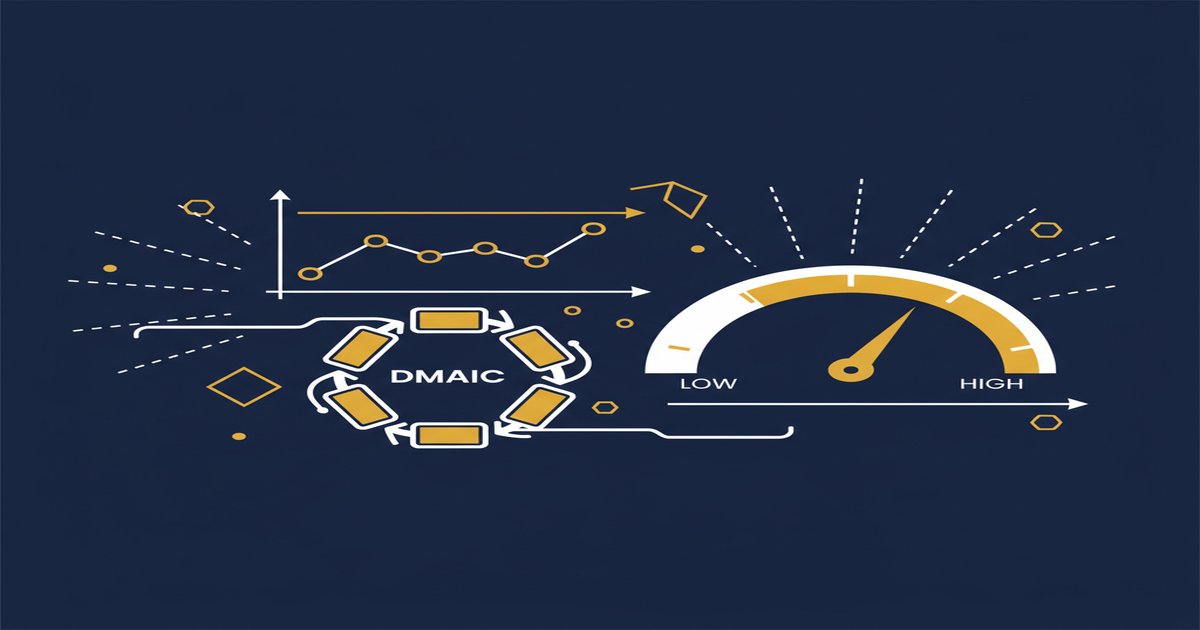
The DMAIC framework is the backbone of every Lean Six Sigma project and the primary methodology a Green Belt must master. It is a disciplined, data-driven approach that provides a structured roadmap for solving business problems. The first phase, Define, is critical for setting the project up for success. Here, the Green Belt creates the project charter, a formal document that outlines the problem statement, goal statement, project scope, key milestones, and team members. The goal must be SMART (Specific, Measurable, Achievable, Relevant, Time-bound). A key activity is also identifying stakeholders and developing a high-level process map, often using a SIPOC (Suppliers, Inputs, Process, Outputs, Customers) diagram to establish project boundaries.
In the Measure phase, the focus shifts to data. The Green Belt's objective is to understand the current state, or baseline performance, of the process. This involves developing a data collection plan, defining what will be measured, and ensuring the measurement system is accurate through a Gage R&R (Repeatability and Reproducibility) study. Green Belts collect data on process performance and potential causes of defects or delays. They calculate baseline metrics like defect rates (Defects Per Million Opportunities, or DPMO), process sigma level, and cycle times, which serve as the benchmark against which all improvements will be judged.
The Analyze phase is where the Green Belt uses statistical analysis to identify the root causes of the problem defined in the first phase. This is the heart of the data-driven approach. Green Belts use tools like Pareto charts to identify the 'vital few' causes, fishbone diagrams to brainstorm potential causes, and statistical techniques like hypothesis testing, correlation, and regression analysis to validate cause-and-effect relationships. The goal is to move beyond symptoms and pinpoint the specific factors that, if addressed, will result in significant process improvement. A well-executed Analyze phase ensures that the solutions developed in the next stage are targeted and effective.
With root causes identified, the a Green Belt leads the team into the Improve phase to develop, test, and implement solutions. This phase often involves creative brainstorming techniques to generate potential fixes. The team then uses tools like pilot testing or Plan-Do-Check-Act (PDCA) cycles to evaluate the effectiveness of proposed solutions on a small scale before a full rollout. The key is to implement changes that are not only effective but also sustainable and cost-efficient. The final phase, Control, is about institutionalizing the improvements and ensuring the process does not revert to its old habits. Green Belts develop control plans, create new standard operating procedures (SOPs), use statistical process control (SPC) charts to monitor performance, and hand the process back to the process owner with a clear plan for ongoing management. This ensures long-term, lasting success.
Essential Six Sigma Statistics for Green Belts
A Lean Six Sigma Green Belt must be statistically literate to be effective. The ability to interpret data is what separates Six Sigma from other, less rigorous improvement methodologies. Your journey begins with mastering descriptive statistics - the tools used to summarize and describe the features of a dataset. This includes calculating the mean (average), median (the middle value), and mode (the most frequent value) to understand central tendency. Equally important is understanding measures of dispersion, primarily standard deviation, which quantifies the amount of variation or spread in a set of data values. A low standard deviation indicates that the data points tend to be close to the mean, signifying a more consistent and predictable process.
Control charts are a Green Belt's most crucial tool for monitoring process stability over time. In the Control phase of DMAIC, you will use these charts, also known as Statistical Process Control (SPC) charts, to distinguish between common cause variation (the natural 'noise' within a process) and special cause variation (unexpected events that need investigation). A Green Belt must know how to select the appropriate chart (e.g., Xbar-R for continuous data in subgroups, P-charts for defect proportions), establish control limits, and interpret the patterns to determine if a process is stable and predictable or out of control.
Process capability analysis answers the question: 'Is our process capable of meeting customer specifications?' Green Belts use capability indices like Cp and Cpk to measure this. Cp (Process Capability) measures the potential capability, comparing the process spread to the specification spread, assuming the process is perfectly centered. Cpk (Process Capability Index) is a more realistic measure because it accounts for how centered the process is relative to the specification limits. A Cpk of 1.33 or higher is a common industry benchmark, indicating a capable process. Green Belts use Minitab or similar software to calculate these indices and drive decisions on whether a process needs fundamental improvement or simply re-centering.
Finally, Green Belts must be proficient in foundational inferential statistics to test theories about root causes. This includes hypothesis testing to determine if observed differences between two groups (e.g., before and after an improvement) are statistically significant or just due to random chance. You will learn to use tests like the t-test and ANOVA (Analysis of Variance) to compare means. Basic regression analysis is also a key skill, allowing a Green Belt to model the relationship between an input variable (X) and an output variable (Y), quantifying how much a change in X impacts Y. These tools are indispensable in the Analyze and Improve phases of DMAIC.
Mastering Lean Tools: A Green Belt’s Mandate for Efficiency
While Six Sigma provides the statistical firepower to reduce variation, Lean provides the tools to eliminate waste and improve flow. A certified Green Belt is an expert in both. The Lean toolkit is focused on maximizing value for the customer by identifying and removing non-value-added activities from a process. One of the most fundamental Lean tools a Green Belt will implement is 5S, a workplace organization method that uses five Japanese words: Seiri (Sort), Seiton (Set in Order), Seiso (Shine), Seiketsu (Standardize), and Shitsuke (Sustain). By creating a clean, organized, and standardized work environment, 5S reduces wasted time searching for tools or information and creates a safer workplace.
Value Stream Mapping (VSM) is a cornerstone Lean technique for Green Belts. It is a powerful visualization tool used to create a detailed map of a process, from customer request to final delivery. Unlike a simple process map, a VSM includes critical data points at each step, such as cycle time, lead time, wait time, and error rates. The Green Belt leads a team to create a 'current state' VSM to identify all forms of waste (defects, overproduction, waiting, non-utilized talent, transportation, inventory, motion, and extra-processing). The team then collaboratively designs a 'future state' VSM that represents a leaner, more efficient process, creating a clear implementation roadmap.
Kaizen, or continuous improvement, is the cultural philosophy that underpins all Lean activity. Green Belts are often responsible for leading Kaizen events, which are short-duration improvement workshops (typically 3-5 days) with a focused team. These events are designed to rapidly implement improvements in a specific area. Another critical tool is Kanban, a signaling system used to manage workflow in a 'pull' system. Kanban boards, whether physical or digital, make work visible, limit work-in-progress (WIP) to prevent bottlenecks, and improve the flow of value to the customer. This is especially prevalent in IT and software development, using frameworks like Scrum and Kanban.
To build quality into the process, Green Belts also deploy Poka-Yoke and SMED. Poka-Yoke, or 'mistake-proofing,' involves designing processes and devices that make it impossible for errors to occur. This can be as simple as a USB plug that can only be inserted one way or as complex as automated checks in a software system. SMED (Single-Minute Exchange of Die) is a technique focused on dramatically reducing the time it takes to switch a process or machine from running one product to the next. By minimizing this changeover time, organizations can produce smaller batches more efficiently, reducing inventory and increasing flexibility.
The Path to Certification: LSSGB Prerequisites, Training, and Exams
There are generally no formal educational prerequisites to undertake Lean Six Sigma Green Belt training, making it an accessible and high-value certification for a wide range of professionals. However, candidates who thrive typically possess at least two to three years of work experience. This practical background provides the necessary context for applying DMAIC principles to real-world problems. The ideal candidate is anyone involved in quality management, operations, engineering, or process improvement, from project managers and business analysts to departmental managers and IT professionals who want to lead improvement initiatives.
Standard LSSGB training, whether delivered online or in-person, is a comprehensive program that typically requires 40 hours of instructor-led instruction. Our IASSC accredited curriculum is designed to cover the complete LSSGB Body of Knowledge. The training dives deep into the DMAIC methodology, statistical principles, and Lean management tools. A critical component of modern training is hands-on practice with statistical software. We emphasize proficiency in Minitab, the industry-standard software for Six Sigma analysis. Our cohorts engage in workshops where they use Minitab to analyze sample data sets, create control charts, and perform capability analysis, ensuring they can apply what they learn immediately.
The certification exam format varies significantly between accrediting bodies, and understanding these differences is key. The IASSC Certified Lean Six Sigma Green Belt exam, which our training prepares you for, is a 100-question, closed-book proctored exam with a 3-hour time limit. It is a rigorous test of your knowledge of the LSSGB Body of Knowledge. In contrast, the ASQ CSSGB exam consists of 100 questions plus 10 unscored pretest questions, administered over 4.5 hours and is also closed book. CSSC's exam is open-book, has 100 questions, and a 2-hour time limit. Some bodies, notably ASQ and many employer-led programs, also require the submission of a completed Green Belt project for certification, while IASSC and CSSC focus purely on knowledge assessment through the exam.
A key differentiator for many programs is the project requirement. While an IASSC certification does not formally mandate a project, we strongly encourage all our students to complete one. Applying the DMAIC framework to a real business problem solidifies learning in a way no exam can. It demonstrates practical competence to current and future employers and builds a portfolio of tangible results. Our instructors mentor students through this process, helping them scope their project, navigate data collection, and validate their findings. This project work, combined with rigorous exam preparation, produces not just certified individuals, but truly capable process improvement practitioners.
Strategic Exam Preparation and Cost Analysis for 2026
A structured study plan is essential for passing the LSSGB certification exam. We recommend a dedicated 8 to 10-week study period following the completion of a 40-hour training course. In the first 3-4 weeks, focus on reviewing the course material for each DMAIC phase, ensuring you have a solid conceptual understanding of the tools and their purpose. The next 3-4 weeks should be dedicated to practical application and mock exams. This means working through Minitab exercises, analyzing case studies, and taking full-length practice tests to simulate the exam environment. The final 1-2 weeks should be reserved for reviewing weak areas identified during practice exams and memorizing key formulas and concepts.
The cost of obtaining a Lean Six Sigma Green Belt certification in 2026 varies based on the training provider, accreditation body, and geographical region. The total investment can be broken down into two main components: training and the certification exam fee. High-quality, instructor-led training from an accredited provider like Learners Ink typically costs between $1,800 and $3,000 USD in North America and Western Europe. In regions like India and Southeast Asia, the cost for comparable training is often between $800 and $1,500 USD.
The exam fees are a separate cost. As of 2026, the IASSC Green Belt exam fee is $295 USD. The ASQ Green Belt exam costs $468 USD for non-members and $368 for members, with membership itself having an annual fee. The CSSC exam is bundled with their training, but the certification itself can be obtained for as little as $229. Therefore, a candidate in the United States could expect a total investment of approximately $2,100 to $3,300, while a candidate in India might invest around $1,100 to $1,800. While self-study options are cheaper, they lack the structure, expert guidance, and networking opportunities of an instructor-led cohort.
This investment should be viewed through the lens of career ROI. The skills gained are directly applicable to any role and result in demonstrable improvements to business performance. Many organizations sponsor their employees for LSSGB training, recognizing the clear financial benefits that certified Green Belts bring. For self-funded individuals, the certification is a powerful differentiator in the job market, leading to enhanced roles and significant salary increases that typically provide a return on the initial investment within the first year.
Career Impact: LSSGB Roles, Salary Uplift, and Industry Demand
Achieving a Lean Six Sigma Green Belt certification is a significant career accelerator in 2026. Certified professionals are qualified for a range of specialized roles, including Process Improvement Specialist, Quality Assurance Engineer, Continuous Improvement Manager, and Operational Excellence Analyst. However, the true value of the LSSGB credential is its applicability across all functions. An IT Project Manager with a Green Belt can better manage project scope and quality. A Financial Analyst can use DMAIC to streamline reporting processes. A Nurse Manager can reduce patient wait times and improve care pathways. The certification is not just for 'quality' professionals; it is for any professional who wants to improve how work gets done.
The financial rewards are tangible and well-documented. According to 2026 industry surveys from sources like the ASQ and various salary aggregators, professionals who add an LSSGB certification to their resume see an average salary uplift of 15-20% compared to their non-certified peers. In North America, a certified Green Belt can expect to earn between $85,000 and $115,000, depending on experience and industry. In the UK and Western Europe, this range is approximately €70,000 to €95,000. This significant increase reflects the high value that organizations place on data-driven decision making and verifiable process improvement skills.
Demand for Green Belts remains incredibly strong across multiple industries. The manufacturing sector, where Six Sigma originated, continues to be a primary employer. However, the last decade has seen explosive growth in the service and transactional sectors. The Banking, Financial Services, and Insurance (BFSI) industry heavily relies on Green Belts to optimize processes like loan applications and claims processing. Healthcare systems use LSSGBs to enhance patient safety, reduce costs, and improve service delivery. The IT and software development sector has also embraced Lean Six Sigma, blending its principles with Agile and DevOps methodologies to improve software quality and deployment speed. E-commerce and logistics companies hire Green Belts to streamline their supply chains and fulfillment operations, where every second saved translates directly to profit.
Your Journey with Learners Ink: From Green Belt to Black Belt Mastery
At Learners Ink, we provide a comprehensive LSSGB training program that is fully aligned with the globally recognized IASSC Body of Knowledge. As an IASSC Accredited Training Organization (ATO), we are committed to the highest standards of instruction. Our 40-hour course is led by certified Master Black Belts with decades of real-world industry experience. The curriculum is a blend of engaging lectures, interactive group exercises, and hands-on Minitab statistical software training. We ensure that our cohorts not only understand the theory but can confidently apply it using the same tools used by Fortune 500 companies.
Our program is designed for working professionals. We offer flexible schedules, including weekend cohorts and live virtual classrooms, allowing you to gain this critical certification without disrupting your career. Upon completion of our training, you will be fully prepared to sit for the IASSC Certified Lean Six Sigma Green Belt exam. We provide extensive support, including practice exams, study guides, and direct access to instructors for questions. Furthermore, we provide mentorship for your first real-world project, helping you build a portfolio that demonstrates your capability to deliver measurable business results.
Graduating from our Green Belt program is just the beginning of your continuous improvement journey. Many of our alumni choose to advance their expertise by pursuing a Black Belt certification. A Green Belt certification is the primary prerequisite for this next level. The path to Black Belt involves more advanced statistical training, a deeper dive into program management and stakeholder leadership, and the successful completion of a complex, high-impact business project. We provide a clear and structured pathway for our Green Belt alumni to progress to our LSSGB course, offering a seamless transition to the next stage of their professional development and solidifying their status as elite enterprise problem solvers.
Talk to a senior counsellor about cohorts, instalments and a plan tailored to your background and timeline.
Frequently asked questions
Lean Six Sigma Green Belt vs. Black Belt: Which is right for me?
Choose Green Belt if you want to lead improvement projects within your current role or department on a part-time basis. It's ideal for professionals who want to add data-driven problem-solving to their skill set. Pursue Black Belt if you aim to become a full-time continuous improvement expert, leading large, cross-functional strategic projects and mentoring Green Belts. A Green Belt certification is a prerequisite for a Black Belt.
Which Lean Six Sigma certification body is the best?
The 'best' body depends on your career goals. IASSC is excellent for a portable, globally recognized certification based on a universal knowledge standard, which is why we are an IASSC ATO. ASQ is highly respected, especially in North America, and its requirement for a project affidavit is valued by employers seeking proven practical application. CSSC is a more accessible option for foundational learning. Your choice should align with your budget and the recognition within your target industry.
Is learning Minitab or another statistical software mandatory?
While it may not be a formal requirement for every exam, practical proficiency in a statistical software package like Minitab is essential for a working Green Belt. It is impossible to perform the required data analysis for real-world projects without it. Our training program includes comprehensive, hands-on Minitab instruction because we believe in equipping our alumni for on-the-job success, not just passing a test.
Do all Green Belt certifications require a real project?
No, they do not. Certifying bodies like IASSC and CSSC focus on validating your knowledge of the Lean Six Sigma Body of Knowledge through a rigorous exam. Bodies like ASQ, and many internal corporate programs, do require a completed project with a signed affidavit. However, regardless of the certification requirement, a completed project with measurable results is the single best way to prove your capability to employers and solidify your learning.
How difficult is the Lean Six Sigma Green Belt exam?
The difficulty is moderate to high and requires dedicated preparation. The IASSC and ASQ exams are closed-book and require a thorough understanding of the entire DMAIC framework, as well as the ability to apply statistical concepts and formulas. Success is not about memorization alone, but about understanding which tool to apply in a given scenario. With a 40-hour accredited course and an 8-10 week study plan, the pass rate for our cohorts is consistently above 95%.
LSSGB vs. PMP: Which certification should I pursue?
This depends on your career focus. A Project Management Professional (PMP) certification is ideal for those managing projects with a defined beginning and end, focusing on scope, schedule, and budget. LSSGB is for professionals focused on improving existing business processes and solving quality problems. The two are highly complementary: a PMP can use LSSGB skills to improve project quality, while a Green Belt can use PMP skills to better manage their DMAIC projects.
Recommended courses
Hand picked for readers of this article.
Ready to make this credential yours?
Talk to a senior counsellor about cohorts, instalments and a study plan tailored to your background.
Continue reading
More in Quality Management
Recommended blogs from the same category.
Kaizen vs Kaikaku in 2026: Small Steps or Radical Change
Kaizen means continuous, small, employee driven improvement (typical scope: 1 to 5 percent gain per event, weekly cadence). Kaikaku means radical, executive sponsored redesign (typical scope: 30 to 70 percent gain, once every 2 to 5 years). Kaizen fixes friction inside the current process. Kaikaku replaces the process. In 2026 mature Lean shops run 40 to 60 kaizen events a year interspersed with one kaikaku every 24 to 36 months when a technology shift (AI, robotics, cloud migration) makes the old process obsolete. Choose kaizen for stable value streams, kaikaku when the value stream itself is broken.
Lean Six Sigma Green Belt vs Black Belt in 2026: Which One First and Why
Green Belt is the practitioner credential: 8 to 12 weeks of prep, one project, USD 300 to 500 fee. Black Belt is the leader credential: 12 to 16 weeks of prep, two documented projects, USD 400 to 900 fee, plus mentoring Green Belts. In 2026 the candid sequence is Green Belt first, deliver one measurable project worth USD 25k or more in savings, then take Black Belt within 18 months while the DMAIC muscle is fresh. Skipping Green Belt is possible but rarely wise: employers cross check project evidence and Green Belt gives you the safe ground to fail on.
Lean vs Six Sigma in 2026: Key Differences and When to Use Each
Lean reduces waste and improves flow. Six Sigma reduces variation and improves capability. Lean tools (value stream mapping, 5S, kanban, SMED, kaizen) are fast, visual and team led. Six Sigma tools (DMAIC, hypothesis testing, DOE, MSA, control charts) are structured, statistical and project led. Mature organisations use both under the Lean Six Sigma umbrella: Lean for daily flow and quick wins, Six Sigma for stubborn variation problems that daily improvement cannot fix. The candid 2026 rule: use Lean when the problem is speed or waste, Six Sigma when the problem is quality or predictability, Lean Six Sigma when both.
Lean Six Sigma Black Belt vs Master Black Belt in 2026: When to Level Up
Lean Six Sigma Black Belt (LSSBB) is the delivery credential: run DMAIC projects end to end, coach Green Belts, deliver USD 100K to USD 500K in benefits per project. Master Black Belt (LSSMBB) is the enterprise credential: coach Black Belts, own the deployment strategy, deliver USD 5M to USD 25M in annual programme benefits. LSSBB prep runs 8 to 12 weeks, exam USD 295 to USD 495. LSSMBB requires 2 to 5 years post BB experience plus 2 to 4 documented projects, exam USD 495 to USD 795. Salary uplift: LSSBB 25 to 40 percent, LSSMBB 40 to 65 percent. Do not skip Black Belt experience to chase Master Black Belt, the credential loses meaning without project depth.
Value Stream Mapping in 2026: A Practical Guide with Symbols, Steps and Real Examples
Value stream mapping (VSM) is Lean's core diagnostic tool. It visualises every step (value adding, necessary non value adding, waste) from customer trigger to customer delivery, with material and information flow, cycle time, wait time and inventory captured on one page. A well run VSM workshop takes 2 to 5 days, covers a specific product family or service line, and produces a current state map, a future state map and a Kaizen plan. In 2026 VSM is used far beyond manufacturing: BFSI mortgage approval, hospital patient journey, SaaS onboarding, DevOps deployment pipeline. The single biggest mistake teams make is drawing the current state from memory instead of walking the process. Walk the gemba first. Draw second.
Lean Six Sigma vs PMP in 2026: Which Certification First
PMP is the delivery leadership credential: 180 questions in 230 minutes, USD 405 (member) or USD 555, 35 contact hours and 36 months of project experience required. Lean Six Sigma Green Belt is the process improvement practitioner credential: 100 to 110 questions in 3 to 4 hours, USD 300 to 500, one project. Take PMP first if your job is delivering projects (any industry, any scope). Take Green Belt first if your job is improving processes in operations, manufacturing, healthcare or a shared service. Do both within 24 months if you are a mid career leader; the combination beats either single credential on both salary and mobility.
Latest from the blog
The freshest posts published across every category.
PRINCE2 Foundation and Practitioner Live Online Training: UK, Europe, Canada, Australia, New Zealand and GCC, HOLIDAYS15 for Live Online Only
Choose PRINCE2 Foundation and Practitioner together to move from understanding the method to applying and tailoring it. Learners Ink provides 32 contact hours over four training days through Instructor-Led Live Online Training, also called Instructor-led Live Virtual Training or a Live Virtual Class. UK fees are GBP 1,399 early bird / GBP 1,799 standard; with HOLIDAYS15, pay GBP 1,189.15 / GBP 1,529.15. Eligible EUR-market fees are EUR 1,399 / EUR 1,799 with the same numerical discounted amounts in EUR. Canada, Australia, New Zealand and GCC fees are shown separately below. HOLIDAYS15 is Live Online only until 31 December 2026, 11:59pm Pacific Time, never Classroom or e-learning. Compare local fees, use the budget and study calculators, download free Foundation and Practitioner practice tests, then select a cohort to Buy Now or Enquire Now.
PRINCE2 Foundation and Practitioner Classroom Training in Cambridge, UK: October to December 2026 Cohorts
Learners Ink offers PRINCE2 7 Foundation and Practitioner Certification Training in Cambridge, United Kingdom, through in-person Classroom and Instructor-Led Live Online Training. The combined programme covers 32 contact hours over four training days. UK Classroom fees are £2,599 early bird and £2,999 standard. The October Classroom intensive is scheduled for 27 to 30 October 2026, subject to the existing booking cutoff and availability; November and December offer weekday and weekend options. Review the current cohort table before buying. HOLIDAYS15 applies to Live Online only, never Classroom.
PMI-CPMAI Live Online Training USA 2026: USD 1,999 Early Bird With Exam Voucher, USD 1,699.15 With HOLIDAYS15
Every US PMI-CPMAI Live Online fee now includes the official PMI-CPMAI exam voucher and PMI's mandatory 21-hour self-paced Exam Prep Course with learning materials. The early bird fee is USD 1,999 with the exam voucher, and the standard fee is USD 2,199 with the exam voucher. Enter HOLIDAYS15 at checkout and the early bird comes to USD 1,699.15, still including the exam voucher, until 31 December 2026, 11:59pm Pacific Time. You get 24 contact hours of live, instructor-led training on the six-phase CPMAI methodology from anywhere in the United States, with no sales tax added. [See dates and book your seat](https://www.learnersink.com/project-management/pmi-cpmai-certification-training-online-training-new-york-ny-usa).
PMI-CPMAI Classroom Training USA 2026: USD 2,999 Early Bird With Exam Voucher Included
US PMI-CPMAI Classroom training is USD 2,999 early bird and USD 3,199 standard, and both fees include the official PMI-CPMAI exam voucher and PMI's mandatory 21-hour self-paced Exam Prep Course with learning materials. You get 24 contact hours face to face with a senior AI project trainer, working through the six CPMAI phases on real cases with peers from your city. No sales tax is added. HOLIDAYS15 does not apply to Classroom; if you want the holiday discount, Live Online is USD 1,699.15 with the voucher until 31 December 2026, 11:59pm Pacific Time. [See Classroom dates](https://www.learnersink.com/project-management/pmi-cpmai-certification-training-course-new-york-ny-usa).
Machine Learning Training USA 2026: Live Online USD 1,099, Classroom USD 1,999, HOLIDAYS15 for Live Online Only
Machine Learning Certification Training in the USA is USD 1,099 early bird for Live Online and USD 1,999 early bird for Classroom. Standard fees are USD 1,399 and USD 2,399. With HOLIDAYS15, Live Online drops to USD 934.15 until 31 December 2026, 11:59pm Pacific Time. You get 50 contact hours of hands-on, instructor-led training in Python, scikit-learn, supervised and unsupervised learning, model evaluation and an intro to deep learning, finished with a capstone project. [See Live Online dates](https://www.learnersink.com/data-ai/machine-learning-certification-training-online-training-new-york-ny-usa).
Project Management Techniques (PMT): Practical Course Guide, Syllabus and Booking
Project Management Techniques (PMT) is a practical Learners Ink workshop for people who need to plan, estimate, monitor and deliver projects more confidently. The programme lists 8 contact hours and covers charter and scope, estimation, critical path scheduling, earned value, risk, stakeholders, quality and agile or hybrid techniques. Choose instructor-led Classroom or Live Online training, check the current fee and dates for your location, and earn a Learners Ink Certificate of Completion after passing the assessment. This is skills training, not the PMP or PRINCE2 certification exam.
Search the blog
Full search and filters: category, year, month, exact date, course, topic, hashtag and long-form.
PRINCE2 Foundation and Practitioner Live Online Training: UK, Europe, Canada, Australia, New Zealand and GCC, HOLIDAYS15 for Live Online Only
Choose PRINCE2 Foundation and Practitioner together to move from understanding the method to applying and tailoring it. Learners Ink provides 32 contact hours over four training days through Instructor-Led Live Online Training, also called Instructor-led Live Virtual Training or a Live Virtual Class. UK fees are GBP 1,399 early bird / GBP 1,799 standard; with HOLIDAYS15, pay GBP 1,189.15 / GBP 1,529.15. Eligible EUR-market fees are EUR 1,399 / EUR 1,799 with the same numerical discounted amounts in EUR. Canada, Australia, New Zealand and GCC fees are shown separately below. HOLIDAYS15 is Live Online only until 31 December 2026, 11:59pm Pacific Time, never Classroom or e-learning. Compare local fees, use the budget and study calculators, download free Foundation and Practitioner practice tests, then select a cohort to Buy Now or Enquire Now.
PRINCE2 Foundation and Practitioner Classroom Training in Cambridge, UK: October to December 2026 Cohorts
Learners Ink offers PRINCE2 7 Foundation and Practitioner Certification Training in Cambridge, United Kingdom, through in-person Classroom and Instructor-Led Live Online Training. The combined programme covers 32 contact hours over four training days. UK Classroom fees are £2,599 early bird and £2,999 standard. The October Classroom intensive is scheduled for 27 to 30 October 2026, subject to the existing booking cutoff and availability; November and December offer weekday and weekend options. Review the current cohort table before buying. HOLIDAYS15 applies to Live Online only, never Classroom.
PMI-CPMAI Live Online Training USA 2026: USD 1,999 Early Bird With Exam Voucher, USD 1,699.15 With HOLIDAYS15
Every US PMI-CPMAI Live Online fee now includes the official PMI-CPMAI exam voucher and PMI's mandatory 21-hour self-paced Exam Prep Course with learning materials. The early bird fee is USD 1,999 with the exam voucher, and the standard fee is USD 2,199 with the exam voucher. Enter HOLIDAYS15 at checkout and the early bird comes to USD 1,699.15, still including the exam voucher, until 31 December 2026, 11:59pm Pacific Time. You get 24 contact hours of live, instructor-led training on the six-phase CPMAI methodology from anywhere in the United States, with no sales tax added. [See dates and book your seat](https://www.learnersink.com/project-management/pmi-cpmai-certification-training-online-training-new-york-ny-usa).
PMI-CPMAI Classroom Training USA 2026: USD 2,999 Early Bird With Exam Voucher Included
US PMI-CPMAI Classroom training is USD 2,999 early bird and USD 3,199 standard, and both fees include the official PMI-CPMAI exam voucher and PMI's mandatory 21-hour self-paced Exam Prep Course with learning materials. You get 24 contact hours face to face with a senior AI project trainer, working through the six CPMAI phases on real cases with peers from your city. No sales tax is added. HOLIDAYS15 does not apply to Classroom; if you want the holiday discount, Live Online is USD 1,699.15 with the voucher until 31 December 2026, 11:59pm Pacific Time. [See Classroom dates](https://www.learnersink.com/project-management/pmi-cpmai-certification-training-course-new-york-ny-usa).
Machine Learning Training USA 2026: Live Online USD 1,099, Classroom USD 1,999, HOLIDAYS15 for Live Online Only
Machine Learning Certification Training in the USA is USD 1,099 early bird for Live Online and USD 1,999 early bird for Classroom. Standard fees are USD 1,399 and USD 2,399. With HOLIDAYS15, Live Online drops to USD 934.15 until 31 December 2026, 11:59pm Pacific Time. You get 50 contact hours of hands-on, instructor-led training in Python, scikit-learn, supervised and unsupervised learning, model evaluation and an intro to deep learning, finished with a capstone project. [See Live Online dates](https://www.learnersink.com/data-ai/machine-learning-certification-training-online-training-new-york-ny-usa).
Project Management Techniques (PMT): Practical Course Guide, Syllabus and Booking
Project Management Techniques (PMT) is a practical Learners Ink workshop for people who need to plan, estimate, monitor and deliver projects more confidently. The programme lists 8 contact hours and covers charter and scope, estimation, critical path scheduling, earned value, risk, stakeholders, quality and agile or hybrid techniques. Choose instructor-led Classroom or Live Online training, check the current fee and dates for your location, and earn a Learners Ink Certificate of Completion after passing the assessment. This is skills training, not the PMP or PRINCE2 certification exam.
Free PMI-CPMAI Practice Test 2026: Full-Length 120 Question Mock Exam for Managing AI Projects
The free Learners Ink PMI-CPMAI practice test gives you 120 questions in 160 minutes, spread across Foundations and the six CPMAI phases, from business needs and data preparation to testing and operationalization. It is tool agnostic, so it checks how you run an AI project, not which software you know. Download it from the [free PMI-CPMAI practice test page](https://www.learnersink.com/resources/practice-test/pmi-cpmai) and email your answers for a free score report.

Holiday Season Guide
Celebrate with 15% off
Instructor-Led Live Online Training Courses Only
HOLIDAYS15
Worldwide, until 31 December 2026, 11:59 pm Pacific Time
Read the holiday guideFree PgMP Practice Test 2026: Full-Length 170 Question Mock Exam Download, Domains, Timing and How to Use It
The free Learners Ink PgMP practice test is a full-length paper: 170 questions in 240 minutes, weighted across the five PMI domains, with Program Life Cycle Management carrying 44% of the marks. It is written as program level scenarios, so you practise thinking about benefits, governance and many projects at once rather than a single project plan. Download it from the [free PgMP practice test page](https://www.learnersink.com/resources/practice-test/pgmp), sit it in one block, and email your answers for a free score report.
ITIL, MSP and M_o_R E-Learning in 2026: The Complete PeopleCert Course and Free Practice Test Guide
Learners Ink has 33 PeopleCert-accredited self-paced ITIL, MSP and M_o_R courses, with individual purchase pages, 365 days of access, and language editions offered according to country. Every module has a relevant free practice paper except the combined MSP learning option, which uses separate Foundation and Practitioner papers. Download a paper through its free request page, compare the courses below, then buy the appropriate self-paced option at the price shown for your country. The [complete catalogue](https://www.learnersink.com/itil-elearning-courses), [free resources](https://www.learnersink.com/resources) and [course enquiry form](https://www.learnersink.com/enquiry) are available without a classroom booking.
ITIL Self-Paced E-Learning in 2026: Complete Guide to All 33 Accredited ITIL, MSP and M_o_R Courses
Learners Ink, a PeopleCert Accredited Training Organisation (ATO ID 8297), sells 33 self-paced ITIL, MSP and M_o_R e-learning courses: 16 ITIL 4 Practitioner modules, the ITIL 4 Specialist, Strategist and Leader modules, six ITIL Version 5 courses, three MSP 5th Edition options and M_o_R 4 Practitioner. Every course is bought online, starts the same day, includes official courseware, practice questions with rationale and tutor support, and gives 365 days of access. Prices are shown in your local currency, 29 courses have a free full-length practice test, and courses are taught in 12 languages. Start at the [ITIL e-learning catalogue](https://www.learnersink.com/itil-elearning-courses).
PRINCE2 Certification Training in Canada: Classroom and Live Online Guide 2026
PRINCE2 training in Canada is available through Classroom and instructor-led Live Online formats. Compare eligibility, format, city availability and the current CAD fee on the relevant course page before booking.
PRINCE2 Certification Training in Australia: Classroom and Live Online Guide 2026
PRINCE2 training in Australia is available through Classroom and instructor-led Live Online formats. Compare eligibility, format, city availability and the current AUD fee on the relevant course page before booking.
PRINCE2 Certification Training in Belgium: Classroom and Live Online Guide 2026
PRINCE2 training in Belgium is available through Classroom and instructor-led Live Online formats. Compare eligibility, format, city availability and the current EUR fee on the relevant course page before booking.
PRINCE2 Certification Training in Ireland: Classroom and Live Online Guide 2026
PRINCE2 training in Ireland is available through Classroom and instructor-led Live Online formats. Compare eligibility, format, city availability and the current EUR fee on the relevant course page before booking.
PMP Certification Training in Canada: Classroom and Live Online Guide 2026
PMP training in Canada is available through Classroom and instructor-led Live Online formats. Compare eligibility, format, city availability and the current CAD fee on the relevant course page before booking.
PMP Certification Training in Australia: Classroom and Live Online Guide 2026
PMP training in Australia is available through Classroom and instructor-led Live Online formats. Compare eligibility, format, city availability and the current AUD fee on the relevant course page before booking.
PMP Certification Training in Belgium: Classroom and Live Online Guide 2026
PMP training in Belgium is available through Classroom and instructor-led Live Online formats. Compare eligibility, format, city availability and the current EUR fee on the relevant course page before booking.
PMP Certification Training in Ireland: Classroom and Live Online Guide 2026
PMP training in Ireland is available through Classroom and instructor-led Live Online formats. Compare eligibility, format, city availability and the current EUR fee on the relevant course page before booking.
ITIL Self-Paced Online E-Learning Courses in 2026: 33 Accredited Courses Taught in 12 Languages of Instruction
Learners Ink publishes 33 accredited self-paced ITIL, MSP and M_o_R e-learning courses, and they are taught in twelve languages of instruction, not only English. German, French, Spanish, Portuguese, Italian, Dutch, Danish, Norwegian, Polish, Japanese and Chinese editions are live alongside English, and the country catalogue shows the languages offered where you are. Every course carries official PeopleCert courseware, practice questions with rationale, tutor support, 365 days of access and an exam voucher option, priced in your own currency. Start at the [self-paced ITIL e-learning catalogue](https://www.learnersink.com/itil-elearning-courses).
Corporate Training in 2026: The Complete Guide for CXOs, HR and L&D Leaders
Corporate training in 2026 works best as a three mode blend: instructor-led live online for the core cohort (lowest cost per learner, no travel, learners from every office in one room), on-site classroom at your own premises for leadership and intact delivery teams, and self-paced e-learning in 12 languages of instruction for scale and for refreshers. Budget the fully loaded cost, not the invoice: add salary hours, travel and productivity drag. Live online typically lands 35 to 55 percent below on-site for the same certification because travel, venue and downtime disappear. Measure at Kirkpatrick levels 3 and 4, gate the programme on a benefit cost ratio above 1.5, and start every rollout with a free full length practice test so you baseline capability before you spend.
Free ITIL 4 Specialist: Plan, Implement and Control Practice Test for Download: Full Length 60 Question Mock Exam for 2026
ITIL 4 Specialist: Plan, Implement and Control is a 60 question paper sat over 90 minutes with a pass mark of 65% (39 / 60), and the self-paced e-learning route gives you the syllabus without ever testing it under a clock. The Learners Ink free ITIL 4 Specialist: Plan, Implement and Control practice test closes that gap: a full length weighted paper that mirrors the live exam pattern question for question. The download is free, no payment at any stage. When you have sat it, email your answers to info@learnersink.com and a certified trainer sends the complete answer key with a written rationale for every question, plus a free personalised score report that breaks your result down syllabus area by syllabus area so you know exactly what to revise.
Free ITIL 4 Leader: Digital and IT Strategy Practice Test for Download: Full Length 30 Question Mock Exam for 2026
ITIL 4 Leader: Digital and IT Strategy is a 30 question paper sat over 60 minutes with a pass mark of 70% (21 / 30), and the self-paced e-learning route gives you the syllabus without ever testing it under a clock. The Learners Ink free ITIL 4 Leader: Digital and IT Strategy practice test closes that gap: a full length weighted paper that mirrors the live exam pattern question for question. The download is free, no payment at any stage. When you have sat it, email your answers to info@learnersink.com and a certified trainer sends the complete answer key with a written rationale for every question, plus a free personalised score report that breaks your result down syllabus area by syllabus area so you know exactly what to revise.
Free ITIL 4 Specialist: Create, Deliver and Support Practice Test for Download: Full Length 40 Question Mock Exam for 2026
ITIL 4 Specialist: Create, Deliver and Support is a 40 question paper sat over 90 minutes with a pass mark of 70% (28 / 40), and the self-paced e-learning route gives you the syllabus without ever testing it under a clock. The Learners Ink free ITIL 4 Specialist: Create, Deliver and Support practice test closes that gap: a full length weighted paper that mirrors the live exam pattern question for question. The download is free, no payment at any stage. When you have sat it, email your answers to info@learnersink.com and a certified trainer sends the complete answer key with a written rationale for every question, plus a free personalised score report that breaks your result down syllabus area by syllabus area so you know exactly what to revise.
Free ITIL 4 Specialist: Drive Stakeholder Value Practice Test for Download: Full Length 40 Question Mock Exam for 2026
ITIL 4 Specialist: Drive Stakeholder Value is a 40 question paper sat over 90 minutes with a pass mark of 70% (28 / 40), and the self-paced e-learning route gives you the syllabus without ever testing it under a clock. The Learners Ink free ITIL 4 Specialist: Drive Stakeholder Value practice test closes that gap: a full length weighted paper that mirrors the live exam pattern question for question. The download is free, no payment at any stage. When you have sat it, email your answers to info@learnersink.com and a certified trainer sends the complete answer key with a written rationale for every question, plus a free personalised score report that breaks your result down syllabus area by syllabus area so you know exactly what to revise.
Free ITIL 4 Specialist: High-Velocity IT Practice Test for Download: Full Length 40 Question Mock Exam for 2026
ITIL 4 Specialist: High-Velocity IT is a 40 question paper sat over 90 minutes with a pass mark of 70% (28 / 40), and the self-paced e-learning route gives you the syllabus without ever testing it under a clock. The Learners Ink free ITIL 4 Specialist: High-Velocity IT practice test closes that gap: a full length weighted paper that mirrors the live exam pattern question for question. The download is free, no payment at any stage. When you have sat it, email your answers to info@learnersink.com and a certified trainer sends the complete answer key with a written rationale for every question, plus a free personalised score report that breaks your result down syllabus area by syllabus area so you know exactly what to revise.
Free ITIL 4 Strategist: Direct, Plan and Improve Practice Test for Download: Full Length 40 Question Mock Exam for 2026
ITIL 4 Strategist: Direct, Plan and Improve is a 40 question paper sat over 90 minutes with a pass mark of 70% (28 / 40), and the self-paced e-learning route gives you the syllabus without ever testing it under a clock. The Learners Ink free ITIL 4 Strategist: Direct, Plan and Improve practice test closes that gap: a full length weighted paper that mirrors the live exam pattern question for question. The download is free, no payment at any stage. When you have sat it, email your answers to info@learnersink.com and a certified trainer sends the complete answer key with a written rationale for every question, plus a free personalised score report that breaks your result down syllabus area by syllabus area so you know exactly what to revise.
Free ITIL Experience (Version 5) Practice Test for Download: Full Length 40 Question Mock Exam for 2026
ITIL Experience (Version 5) is a 40 question paper sat over 90 minutes with a pass mark of 70% (28 / 40), and the self-paced e-learning route gives you the syllabus without ever testing it under a clock. The Learners Ink free ITIL Experience (Version 5) practice test closes that gap: a full length weighted paper that mirrors the live exam pattern question for question. The download is free, no payment at any stage. When you have sat it, email your answers to info@learnersink.com and a certified trainer sends the complete answer key with a written rationale for every question, plus a free personalised score report that breaks your result down syllabus area by syllabus area so you know exactly what to revise.
Free ITIL Foundation Bridge (Version 5) Practice Test for Download: Full Length 20 Question Mock Exam for 2026
ITIL Foundation Bridge (Version 5) is a 20 question paper sat over 30 minutes with a pass mark of 65% (13 / 20), and the self-paced e-learning route gives you the syllabus without ever testing it under a clock. The Learners Ink free ITIL Foundation Bridge (Version 5) practice test closes that gap: a full length weighted paper that mirrors the live exam pattern question for question. The download is free, no payment at any stage. When you have sat it, email your answers to info@learnersink.com and a certified trainer sends the complete answer key with a written rationale for every question, plus a free personalised score report that breaks your result down syllabus area by syllabus area so you know exactly what to revise.
Free ITIL Product (Version 5) Practice Test for Download: Full Length 40 Question Mock Exam for 2026
ITIL Product (Version 5) is a 40 question paper sat over 90 minutes with a pass mark of 70% (28 / 40), and the self-paced e-learning route gives you the syllabus without ever testing it under a clock. The Learners Ink free ITIL Product (Version 5) practice test closes that gap: a full length weighted paper that mirrors the live exam pattern question for question. The download is free, no payment at any stage. When you have sat it, email your answers to info@learnersink.com and a certified trainer sends the complete answer key with a written rationale for every question, plus a free personalised score report that breaks your result down syllabus area by syllabus area so you know exactly what to revise.