

A Lean Six Sigma Black Belt certification is the definitive credential for senior process improvement leaders. It requires mastery of advanced statistics, leadership of enterprise-scale projects, and the ability to mentor Green Belts. Expect a rigorous 4-hour exam and a salary uplift of up to 25% over a Green Belt, with top practitioners earning well over $150,000 in 2026.
Save 15% on any Instructor-Led Live Online Training course, worldwide, with code HOLIDAYS15. Valid until 31 December 2026, 11:59 pm Pacific Time. See courses and savings
Defining the Black Belt: Beyond Process Improvement to Enterprise Leadership
A Lean Six Sigma Black Belt (LSSBB) is not merely a process improvement expert; they are an agent of strategic change within an organization. This certification designates a professional who possesses a thorough, data-driven understanding of business performance and can lead complex, cross-functional projects that deliver significant financial and operational results. The target audience for a Black Belt is the experienced practitioner, typically a certified Green Belt, who is ready to move from participating in projects to leading them. They are the primary mentors for Green Belts and Yellow Belts, guiding them in applying Lean Six Sigma tools and methodologies correctly.
The role of a Black Belt transcends the tactical application of tools like value stream mapping or root cause analysis. It demands a strategic mindset focused on identifying and prioritizing projects that align with the highest-level business objectives. These professionals act as internal consultants, working with senior leadership to diagnose systemic issues, redesign entire value streams, and deploy solutions that have a measurable impact on the bottom line. Our cohorts at Learners Ink are composed of senior analysts, project managers, operations leaders, and engineers who are making this exact transition from functional expert to strategic improvement leader.
Achieving LSSBB status signifies mastery over not just the 'how' of process improvement but the 'what' and 'why'. Black Belts are expected to quantify the financial impact of their projects, presenting clear business cases and post-project reports to executive stakeholders. This requires a fluency in financial metrics and an ability to translate statistical findings into a compelling narrative of cost reduction, revenue enhancement, and risk mitigation. As an IASSC Accredited Training Organization (ATO), our curriculum is explicitly designed to build this executive-level communication skill, ensuring our graduates can champion change from the shop floor to the boardroom.
Black Belt at-a-glance
The economics of the Black Belt for a working professional.
| Dimension | Detail |
|---|---|
| Prerequisite | Green Belt strongly recommended, not always mandatory |
| Training hours | 160 to 200 |
| Exam | 150 Qs, 4 hrs, 70% pass (ASQ / IASSC benchmark) |
| Project | 1 to 2 signed-off DMAIC projects |
| Cost | $2,500 to $4,500 all-in |
| Median salary uplift | 20 to 30% |
The Lean Six Sigma Belt Progression: A Structured Path to Mastery
The journey to becoming a Black Belt is part of a well-defined progression within the Lean Six Sigma framework. Each level, or 'Belt', represents a deeper level of knowledge, a broader scope of application, and greater leadership responsibility. This structured path ensures a common language and toolset is established across the organization, facilitating more effective collaboration on improvement initiatives.
The hierarchy provides a clear developmental roadmap for individuals and a scalable model for organizations to build internal capability. It allows for differentiated training, ensuring that team members receive the appropriate level of instruction for their specific role in improvement activities.
Here is the standard progression:
- Yellow Belt: Possesses a foundational awareness of Lean Six Sigma concepts. Yellow Belts often participate as team members on projects led by Green or Black Belts, primarily contributing by collecting data or applying basic tools within their functional area.
- Green Belt: The workhorses of the Lean Six Sigma system. Green Belts have a strong grasp of the DMAIC (Define, Measure, Analyze, Improve, Control) methodology and lead smaller-scale improvement projects within their own departments. They typically dedicate a portion of their time to process improvement while maintaining their regular job duties.
- Black Belt: The leaders of the system. Black Belts are full-time change agents who lead significant, cross-functional improvement projects. They possess advanced statistical and leadership skills and are responsible for mentoring Green and Yellow Belts. Their projects are expected to deliver substantial, quantified business results.
- Master Black Belt (MBB): The strategic apex of the system. Master Black Belts are seasoned Black Belts who take on a more strategic role. They are responsible for deploying the Lean Six Sigma program across the enterprise, advising senior leadership on improvement strategy, managing the project pipeline, and providing the highest level of technical expertise and mentorship to Black Belts.
Mastering the Methodologies: DMAIC and DMADV
The curriculum for a Lean Six Sigma Black Belt is anchored in the complete mastery of two core project methodologies: DMAIC and DMADV. While Green Belts are proficient in DMAIC, Black Belts are expected to apply it to far more complex problems and are also required to be experts in DMADV for projects focused on designing new processes or products.
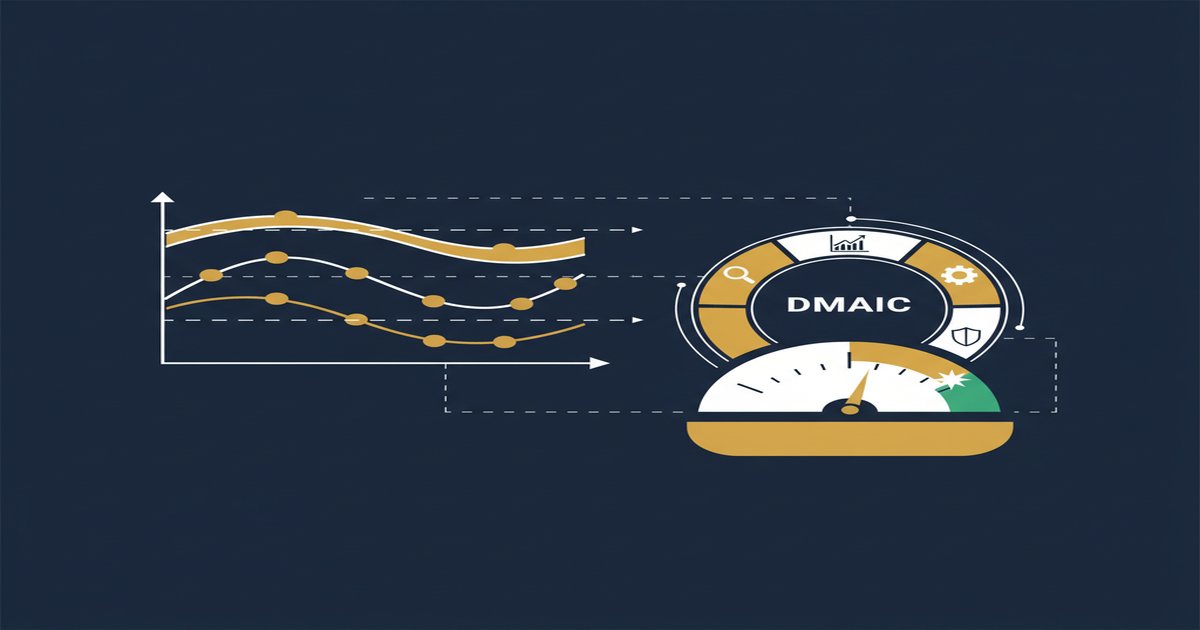
DMAIC is the classic framework for improving existing processes. As a Black Belt, you are expected to lead teams through each phase with a high degree of statistical rigor. Your role involves navigating organizational roadblocks, securing stakeholder buy-in, and ensuring the project stays on track to deliver its chartered goals. The expectation at the Black Belt level is that you can manage multiple DMAIC projects simultaneously, delegate tasks effectively to Green Belt team members, and present phase-gate reviews to executive sponsors with confidence and clarity.
The phases of DMAIC are:
DMADV, also known as Design for Six Sigma (DFSS), is applied when an existing process is so flawed that it requires complete replacement, or when a new product or service is being developed. Black Belts must be proficient in this forward-looking methodology to ensure that new designs are 'born' with high quality and capability, preventing future problems. This involves translating customer needs into technical requirements, developing robust designs, and verifying that the design will perform at a Six Sigma level before full-scale implementation. Proficiency in DMADV is a key differentiator for Black Belts, positioning them as leaders in both innovation and optimization.
- Define: Clearly articulate the business problem, project goals, scope, resources, and timeline. Create a formal project charter.
- Measure: Collect baseline data to quantify the current process performance and establish a starting-point Sigma level.
- Analyze: Use advanced statistical analysis to identify, validate, and prioritize the root causes of the problem.
- Improve: Brainstorm, design, and implement solutions that target the root causes. Use statistical tools to confirm the improvement.
- Control: Create a monitoring plan, update standard operating procedures, and hand off the improved process to the process owner to ensure gains are sustained.
The Statistical Deep Dive: Tools for Enterprise-Level Analysis
What truly separates a Black Belt from a Green Belt is the depth and breadth of their statistical toolkit. While Green Belts work with foundational statistics, Black Belts must master a suite of advanced analytical techniques to solve the most entrenched and complex business problems. This statistical acumen allows them to dissect multi-faceted issues, identify subtle relationships between variables, and build predictive models to optimize performance.
A core component of LSSBB training is advanced hypothesis testing. Black Belts move beyond simple t-tests and Chi-Square tests to work with non-parametric tests, multiple sample tests, and tests for equal variance. They must have an intuitive understanding of statistical power and sample size calculations to design effective experiments. This ensures that data collection efforts are efficient and that the subsequent analysis is robust enough to drive high-stakes business decisions.
This advanced capability is built upon several key pillars of statistical analysis:
At Learners Ink, our IASSC-accredited training places a heavy emphasis on these topics. We utilize a hands-on approach, where our cohorts work with complex, real-world datasets in statistical software. The goal is not just to teach the theory but to build practical, applicable skills. A Black Belt must be able to confidently select the right tool for the job, execute the analysis correctly, and, most importantly, interpret the results to provide actionable business recommendations. This includes quantifying the financial impact, calculating ROI for proposed solutions, and building control charts that monitor the most critical process variables.
- Design of Experiments (DOE): Black Belts must be able to design and analyze full factorial, fractional factorial, and response surface method experiments. DOE is a powerful technique used to systematically explore the relationship between multiple input factors and a key output variable, allowing for true process optimization rather than incremental improvement.
- Measurement System Analysis (MSA): You cannot improve what you cannot measure reliably. Black Belts must be able to conduct advanced Gage R&R (Repeatability and Reproducibility) studies, including attribute and destructive testing scenarios, to validate that data collection systems are trustworthy before any analysis is performed.
- Advanced Regression Analysis: This includes multiple linear regression, logistic regression (for binary outcomes), and non-linear regression. Black Belts use these tools to create predictive models that explain how a set of independent variables (X's) influences a key dependent variable (Y).
- Analysis of Variance (ANOVA): Beyond one-way ANOVA, Black Belts must master two-way ANOVA and General Linear Models (GLM) to analyze the impact of multiple categorical factors on a continuous output.
- Advanced Process Capability and Six Sigma Metrics: Calculating process capability using indices like Cpk and Ppk is fundamental. Black Belts must also handle non-normal data transformations and understand a wider array of metrics, including Defects Per Million Opportunities (DPMO), Rolled Throughput Yield (RTY), and the cost of poor quality (COPQ).
Prerequisites and Project Requirements for Certification
The path to Black Belt certification is rigorous and requires a clear demonstration of both theoretical knowledge and practical application. Most reputable certifying bodies and employers have specific prerequisites to ensure that candidates possess the necessary foundational experience to succeed. The most common prerequisite is a Lean Six Sigma Green Belt certification. While some programs allow direct entry to Black Belt training, our experience at Learners Ink shows that candidates with prior Green Belt training and project experience are significantly more successful. They already possess the core DMAIC vocabulary and have a practical understanding of basic tools, allowing them to focus on the advanced statistical and leadership concepts of the Black Belt curriculum.
Beyond a Green Belt certification, practical project experience is paramount. The American Society for Quality (ASQ), for example, requires Black Belt candidates to have two completed projects with signed affidavits. Other bodies, like the International Association for Six Sigma Certification (IASSC), focus purely on the knowledge exam but employer-sponsored programs almost universally require project completion for internal certification. A typical requirement is the successful completion of at least two LSSBB-level projects or one particularly large and complex project.
These projects are significantly more demanding than Green Belt projects. They must be cross-functional, address a complex business problem, and deliver substantial, measurable results. Many corporate programs set a minimum savings target, often in the range of $75,000 to $100,000 per project. The candidate must have led the project from charter to completion, demonstrating mastery of the DMAIC or DMADV framework and the application of advanced statistical tools. A project portfolio, including the charter, data analysis files, tollgate reviews, and a final report quantifying the financial impact, is the ultimate proof of a Black Belt's capability.
Navigating the Lean Six Sigma Black Belt Exams in 2026
The culmination of your training is a certification exam designed to rigorously test your comprehensive knowledge of the Lean Six Sigma body of knowledge. In 2026, the exam formats vary between the major certifying bodies, and it is critical to understand the specific requirements of the credential you are pursuing. As an IASSC Accredited Training Organization, we prepare our candidates for the demanding standards of the top-tier certifications.
The major certifying bodies have distinct exam structures, book policies, and experience requirements:
Successfully passing one of these exams requires dedicated preparation. A typical study plan spans 12 to 16 weeks following the completion of formal training. This period is used to review the entire body of knowledge, practice with mock exams, and solidify the application of statistical formulas and concepts. For open-book exams like the IASSC and CSSC, the challenge is not memorization but time management and the ability to quickly locate and apply the correct information. Candidates must be intimately familiar with their reference materials. For proctored, closed-book exams like ASQ, a deeper level of recall is necessary, in addition to the validated project experience.
- IASSC Certified Lean Six Sigma Black Belt (ICBB): This is a 4-hour, 150-question, proctored closed-book exam (note: IASSC updated from open-book). There are no prerequisite projects required for the exam itself, making it a pure test of knowledge. The certification is highly respected for its alignment with a universal body of knowledge.
- Council for Six Sigma Certification (CSSC) Black Belt: This is a 4-hour, 150 multiple-choice question exam. Similar to IASSC, it tests theoretical knowledge without a project requirement for certification. It's an open-book format, testing application and reference skills under time pressure.
- American Society for Quality (ASQ) Certified Six Sigma Black Belt (CSSBB): This is a 4.5-hour, 165 multiple-choice question exam. It is one of the most demanding certifications. ASQ requires candidates to pass the exam AND submit a signed affidavit proving at least three years of experience in the Six Sigma body of knowledge and have completed two projects.
Investment and ROI: LSSBB Training Costs and Salary Uplift in 2026
Undertaking Lean Six Sigma Black Belt certification is a significant investment of time and capital, but one that delivers a substantial and quantifiable return. In 2026, the costs for training and certification vary by provider, region, and format, but a comprehensive program represents a strategic career expenditure. High-quality, instructor-led training from an accredited provider like Learners Ink, which includes software training, extensive materials, and exam preparation, typically ranges from $4,000 to $7,000 in North America and €3,500 to €6,000 in Europe.
This investment covers a comprehensive learning experience, usually spanning 60 to 80 hours of direct instruction, often delivered over several weeks to allow for absorption and application of complex topics. The fee includes the full curriculum, one-on-one project support from Master Black Belts, access to statistical software like Minitab or JMP, and extensive mock exam question banks. The certification exam fee itself is a separate cost, generally ranging from $300 to $550, depending on the certifying body.
The return on this investment is clearly reflected in salary data. As of 2026, certified Lean Six Sigma Black Belts command a significant salary premium. Our alumni data and industry surveys show that a professional earning $95,000 as a Green Belt can realistically expect a salary in the $115,000 to $130,000 range after achieving Black Belt certification and completing their first projects. This represents an immediate uplift of 20-25%. Senior Black Belts with extensive experience who move into leadership roles command even higher compensation. Roles like Continuous Improvement Manager, Operational Excellence Lead, and Director of Process Improvement frequently offer salaries well over $150,000.
Beyond the direct salary increase, the ROI is also measured in career velocity. The LSSBB credential is a powerful differentiator that unlocks senior-level opportunities that are simply not accessible to Green Belts. Organizations explicitly seek out certified Black Belts for high-impact, strategic roles. The ability to lead enterprise-level projects, mentor teams, and speak the language of senior leadership accelerates a professional's trajectory toward executive positions.
The Master Black Belt: The Path to Strategic Leadership
For the most dedicated and experienced Black Belts, the journey of mastery continues to the highest level: the Lean Six Sigma Master Black Belt (MBB). This is not simply a more advanced certification; it is a fundamental shift in role, from a leader of projects to a leader of programs and a shaper of corporate strategy. The Master Black Belt is the keystone of a successful continuous improvement culture, responsible for its deployment, sustainability, and alignment with the highest-level business objectives.
The path to MBB is demanding. It requires several years of experience as a practicing Black Belt, with a portfolio of numerous successfully completed, high-impact projects. Candidates for MBB are expected to have mentored a significant number of Green and Black Belts, helping them complete their own projects and achieve certification. The MBB's expertise must be both deep and broad. They must possess an unparalleled statistical command, often acting as the final point of escalation for the most complex analytical challenges faced by the organization's Black Belts.
Beyond technical expertise, the MBB role is defined by strategic leadership. Their responsibilities typically include:
Training for an MBB is less about learning new tools and more about developing strategic and leadership capabilities. It often involves advanced topics in change management, program management, financial analysis, and instructional design. At Learners Ink, we guide our most accomplished Black Belt alumni on this path, focusing on the skills required to transition from a tactical expert to a strategic business partner. Becoming a Master Black Belt is the pinnacle of the Lean Six Sigma profession, placing you in the senior leadership team as the organization's chief authority on process excellence and operational strategy.
- Program Deployment: Designing and leading the deployment of the Lean Six Sigma program across a business unit or the entire enterprise.
- Strategic Alignment: Working with C-level executives to identify and prioritize the most critical areas for improvement initiatives to ensure work is focused on what matters most.
- Curriculum and Training: Developing and delivering the internal training curriculum for Yellow, Green, and Black Belts.
- Project Portfolio Management: Managing the pipeline of improvement projects, ensuring resources are allocated effectively and projects are on track to deliver their financial goals.
- Advanced Mentorship: Serving as the primary coach and mentor for the organization's Black Belts, guiding them through technical and political project challenges.
Talk to a senior counsellor about cohorts, instalments and a plan tailored to your background and timeline.
Frequently asked questions
Is a Green Belt certification mandatory before starting a Black Belt?
While some programs offer direct Black Belt training, it is highly inadvisable. A Green Belt certification provides the essential foundation in the DMAIC methodology and core statistical tools. Reputable programs, including ours at Learners Ink, strongly recommend or require a Green Belt certification plus at least one completed project to ensure you have the prerequisite knowledge to handle the advanced Black Belt curriculum.
How much more advanced is a Black Belt compared to a Green Belt?
The leap from Green Belt to Black Belt is substantial. While Green Belts lead projects within their own functional areas, Black Belts lead complex, cross-functional, enterprise-level projects. The primary difference lies in the depth of statistical analysis, including proficiency in Design of Experiments (DOE), multiple regression, and advanced statistical modeling, as well as a heavy focus on change management and leadership.
Is there a strict financial savings requirement for Black Belt projects?
While certifying bodies like IASSC do not require projects for the exam, real-world application is key. For corporate sponsorship and internal certification, there is almost always a financial requirement. Many organizations expect Black Belt projects to deliver a minimum of $75,000 to $100,000 in validated hard savings, proving a significant return on investment.
Which certifying body is the best for a Black Belt?
The 'best' depends on your career goals. IASSC is highly respected for its rigorous, knowledge-based exam and global recognition, which is why we are an IASSC ATO. ASQ is the gold standard in North America, particularly in manufacturing, due to its stringent experience and project requirements. Your choice should align with your industry, geographic location, and whether you need to validate prior project work.
What is the total time investment for a Black Belt certification?
You should plan for a significant commitment. This includes 60-80 hours of formal instructor-led training, followed by a dedicated 12-16 week study period for exam preparation. The largest investment is the time spent leading two full-scale projects, which can take six months to over a year to complete from charter to control.
What salary jump can I realistically expect with a Black Belt?
Based on 2026 industry data, moving from a Green Belt to a certified Black Belt with project experience typically results in a salary increase of 20-25%. For example, a Green Belt earning $95,000 could see their salary increase to the $115,000-$130,000 range. This credential unlocks access to senior roles like 'Continuous Improvement Manager' or 'Operational Excellence Lead' which command salaries upwards of $150,000.
Recommended courses
Hand picked for readers of this article.
Ready to make this credential yours?
Talk to a senior counsellor about cohorts, instalments and a study plan tailored to your background.
Continue reading
More in Quality Management
Recommended blogs from the same category.
Kaizen vs Kaikaku in 2026: Small Steps or Radical Change
Kaizen means continuous, small, employee driven improvement (typical scope: 1 to 5 percent gain per event, weekly cadence). Kaikaku means radical, executive sponsored redesign (typical scope: 30 to 70 percent gain, once every 2 to 5 years). Kaizen fixes friction inside the current process. Kaikaku replaces the process. In 2026 mature Lean shops run 40 to 60 kaizen events a year interspersed with one kaikaku every 24 to 36 months when a technology shift (AI, robotics, cloud migration) makes the old process obsolete. Choose kaizen for stable value streams, kaikaku when the value stream itself is broken.
Lean Six Sigma Green Belt vs Black Belt in 2026: Which One First and Why
Green Belt is the practitioner credential: 8 to 12 weeks of prep, one project, USD 300 to 500 fee. Black Belt is the leader credential: 12 to 16 weeks of prep, two documented projects, USD 400 to 900 fee, plus mentoring Green Belts. In 2026 the candid sequence is Green Belt first, deliver one measurable project worth USD 25k or more in savings, then take Black Belt within 18 months while the DMAIC muscle is fresh. Skipping Green Belt is possible but rarely wise: employers cross check project evidence and Green Belt gives you the safe ground to fail on.
Lean vs Six Sigma in 2026: Key Differences and When to Use Each
Lean reduces waste and improves flow. Six Sigma reduces variation and improves capability. Lean tools (value stream mapping, 5S, kanban, SMED, kaizen) are fast, visual and team led. Six Sigma tools (DMAIC, hypothesis testing, DOE, MSA, control charts) are structured, statistical and project led. Mature organisations use both under the Lean Six Sigma umbrella: Lean for daily flow and quick wins, Six Sigma for stubborn variation problems that daily improvement cannot fix. The candid 2026 rule: use Lean when the problem is speed or waste, Six Sigma when the problem is quality or predictability, Lean Six Sigma when both.
Lean Six Sigma Black Belt vs Master Black Belt in 2026: When to Level Up
Lean Six Sigma Black Belt (LSSBB) is the delivery credential: run DMAIC projects end to end, coach Green Belts, deliver USD 100K to USD 500K in benefits per project. Master Black Belt (LSSMBB) is the enterprise credential: coach Black Belts, own the deployment strategy, deliver USD 5M to USD 25M in annual programme benefits. LSSBB prep runs 8 to 12 weeks, exam USD 295 to USD 495. LSSMBB requires 2 to 5 years post BB experience plus 2 to 4 documented projects, exam USD 495 to USD 795. Salary uplift: LSSBB 25 to 40 percent, LSSMBB 40 to 65 percent. Do not skip Black Belt experience to chase Master Black Belt, the credential loses meaning without project depth.
Value Stream Mapping in 2026: A Practical Guide with Symbols, Steps and Real Examples
Value stream mapping (VSM) is Lean's core diagnostic tool. It visualises every step (value adding, necessary non value adding, waste) from customer trigger to customer delivery, with material and information flow, cycle time, wait time and inventory captured on one page. A well run VSM workshop takes 2 to 5 days, covers a specific product family or service line, and produces a current state map, a future state map and a Kaizen plan. In 2026 VSM is used far beyond manufacturing: BFSI mortgage approval, hospital patient journey, SaaS onboarding, DevOps deployment pipeline. The single biggest mistake teams make is drawing the current state from memory instead of walking the process. Walk the gemba first. Draw second.
Lean Six Sigma vs PMP in 2026: Which Certification First
PMP is the delivery leadership credential: 180 questions in 230 minutes, USD 405 (member) or USD 555, 35 contact hours and 36 months of project experience required. Lean Six Sigma Green Belt is the process improvement practitioner credential: 100 to 110 questions in 3 to 4 hours, USD 300 to 500, one project. Take PMP first if your job is delivering projects (any industry, any scope). Take Green Belt first if your job is improving processes in operations, manufacturing, healthcare or a shared service. Do both within 24 months if you are a mid career leader; the combination beats either single credential on both salary and mobility.
Latest from the blog
The freshest posts published across every category.
PRINCE2 Foundation and Practitioner Classroom Training in Cambridge, UK: October to December 2026 Cohorts
Learners Ink offers PRINCE2 7 Foundation and Practitioner Certification Training in Cambridge, United Kingdom, through in-person Classroom and Instructor-Led Live Online Training. The combined programme covers 32 contact hours over four training days. UK Classroom fees are £2,599 early bird and £2,999 standard. The October Classroom intensive is scheduled for 27 to 30 October 2026, subject to the existing booking cutoff and availability; November and December offer weekday and weekend options. Review the current cohort table before buying. HOLIDAYS15 applies to Live Online only, never Classroom.
PMI-CPMAI Live Online Training USA 2026: USD 1,999 Early Bird With Exam Voucher, USD 1,699.15 With HOLIDAYS15
Every US PMI-CPMAI Live Online fee now includes the official PMI-CPMAI exam voucher and PMI's mandatory 21-hour self-paced Exam Prep Course with learning materials. The early bird fee is USD 1,999 with the exam voucher, and the standard fee is USD 2,199 with the exam voucher. Enter HOLIDAYS15 at checkout and the early bird comes to USD 1,699.15, still including the exam voucher, until 31 December 2026, 11:59pm Pacific Time. You get 24 contact hours of live, instructor-led training on the six-phase CPMAI methodology from anywhere in the United States, with no sales tax added. [See dates and book your seat](https://www.learnersink.com/project-management/pmi-cpmai-certification-training-online-training-new-york-ny-usa).
PMI-CPMAI Classroom Training USA 2026: USD 2,999 Early Bird With Exam Voucher Included
US PMI-CPMAI Classroom training is USD 2,999 early bird and USD 3,199 standard, and both fees include the official PMI-CPMAI exam voucher and PMI's mandatory 21-hour self-paced Exam Prep Course with learning materials. You get 24 contact hours face to face with a senior AI project trainer, working through the six CPMAI phases on real cases with peers from your city. No sales tax is added. HOLIDAYS15 does not apply to Classroom; if you want the holiday discount, Live Online is USD 1,699.15 with the voucher until 31 December 2026, 11:59pm Pacific Time. [See Classroom dates](https://www.learnersink.com/project-management/pmi-cpmai-certification-training-course-new-york-ny-usa).
Machine Learning Training USA 2026: Live Online USD 1,099, Classroom USD 1,999, HOLIDAYS15 for Live Online Only
Machine Learning Certification Training in the USA is USD 1,099 early bird for Live Online and USD 1,999 early bird for Classroom. Standard fees are USD 1,399 and USD 2,399. With HOLIDAYS15, Live Online drops to USD 934.15 until 31 December 2026, 11:59pm Pacific Time. You get 50 contact hours of hands-on, instructor-led training in Python, scikit-learn, supervised and unsupervised learning, model evaluation and an intro to deep learning, finished with a capstone project. [See Live Online dates](https://www.learnersink.com/data-ai/machine-learning-certification-training-online-training-new-york-ny-usa).
Project Management Techniques (PMT): Practical Course Guide, Syllabus and Booking
Project Management Techniques (PMT) is a practical Learners Ink workshop for people who need to plan, estimate, monitor and deliver projects more confidently. The programme lists 8 contact hours and covers charter and scope, estimation, critical path scheduling, earned value, risk, stakeholders, quality and agile or hybrid techniques. Choose instructor-led Classroom or Live Online training, check the current fee and dates for your location, and earn a Learners Ink Certificate of Completion after passing the assessment. This is skills training, not the PMP or PRINCE2 certification exam.
Free PMI-CPMAI Practice Test 2026: Full-Length 120 Question Mock Exam for Managing AI Projects
The free Learners Ink PMI-CPMAI practice test gives you 120 questions in 160 minutes, spread across Foundations and the six CPMAI phases, from business needs and data preparation to testing and operationalization. It is tool agnostic, so it checks how you run an AI project, not which software you know. Download it from the [free PMI-CPMAI practice test page](https://www.learnersink.com/resources/practice-test/pmi-cpmai) and email your answers for a free score report.
Search the blog
Full search and filters: category, year, month, exact date, course, topic, hashtag and long-form.
PRINCE2 Foundation and Practitioner Classroom Training in Cambridge, UK: October to December 2026 Cohorts
Learners Ink offers PRINCE2 7 Foundation and Practitioner Certification Training in Cambridge, United Kingdom, through in-person Classroom and Instructor-Led Live Online Training. The combined programme covers 32 contact hours over four training days. UK Classroom fees are £2,599 early bird and £2,999 standard. The October Classroom intensive is scheduled for 27 to 30 October 2026, subject to the existing booking cutoff and availability; November and December offer weekday and weekend options. Review the current cohort table before buying. HOLIDAYS15 applies to Live Online only, never Classroom.
PMI-CPMAI Live Online Training USA 2026: USD 1,999 Early Bird With Exam Voucher, USD 1,699.15 With HOLIDAYS15
Every US PMI-CPMAI Live Online fee now includes the official PMI-CPMAI exam voucher and PMI's mandatory 21-hour self-paced Exam Prep Course with learning materials. The early bird fee is USD 1,999 with the exam voucher, and the standard fee is USD 2,199 with the exam voucher. Enter HOLIDAYS15 at checkout and the early bird comes to USD 1,699.15, still including the exam voucher, until 31 December 2026, 11:59pm Pacific Time. You get 24 contact hours of live, instructor-led training on the six-phase CPMAI methodology from anywhere in the United States, with no sales tax added. [See dates and book your seat](https://www.learnersink.com/project-management/pmi-cpmai-certification-training-online-training-new-york-ny-usa).
PMI-CPMAI Classroom Training USA 2026: USD 2,999 Early Bird With Exam Voucher Included
US PMI-CPMAI Classroom training is USD 2,999 early bird and USD 3,199 standard, and both fees include the official PMI-CPMAI exam voucher and PMI's mandatory 21-hour self-paced Exam Prep Course with learning materials. You get 24 contact hours face to face with a senior AI project trainer, working through the six CPMAI phases on real cases with peers from your city. No sales tax is added. HOLIDAYS15 does not apply to Classroom; if you want the holiday discount, Live Online is USD 1,699.15 with the voucher until 31 December 2026, 11:59pm Pacific Time. [See Classroom dates](https://www.learnersink.com/project-management/pmi-cpmai-certification-training-course-new-york-ny-usa).
Machine Learning Training USA 2026: Live Online USD 1,099, Classroom USD 1,999, HOLIDAYS15 for Live Online Only
Machine Learning Certification Training in the USA is USD 1,099 early bird for Live Online and USD 1,999 early bird for Classroom. Standard fees are USD 1,399 and USD 2,399. With HOLIDAYS15, Live Online drops to USD 934.15 until 31 December 2026, 11:59pm Pacific Time. You get 50 contact hours of hands-on, instructor-led training in Python, scikit-learn, supervised and unsupervised learning, model evaluation and an intro to deep learning, finished with a capstone project. [See Live Online dates](https://www.learnersink.com/data-ai/machine-learning-certification-training-online-training-new-york-ny-usa).
Project Management Techniques (PMT): Practical Course Guide, Syllabus and Booking
Project Management Techniques (PMT) is a practical Learners Ink workshop for people who need to plan, estimate, monitor and deliver projects more confidently. The programme lists 8 contact hours and covers charter and scope, estimation, critical path scheduling, earned value, risk, stakeholders, quality and agile or hybrid techniques. Choose instructor-led Classroom or Live Online training, check the current fee and dates for your location, and earn a Learners Ink Certificate of Completion after passing the assessment. This is skills training, not the PMP or PRINCE2 certification exam.
Free PMI-CPMAI Practice Test 2026: Full-Length 120 Question Mock Exam for Managing AI Projects
The free Learners Ink PMI-CPMAI practice test gives you 120 questions in 160 minutes, spread across Foundations and the six CPMAI phases, from business needs and data preparation to testing and operationalization. It is tool agnostic, so it checks how you run an AI project, not which software you know. Download it from the [free PMI-CPMAI practice test page](https://www.learnersink.com/resources/practice-test/pmi-cpmai) and email your answers for a free score report.

Holiday Season Guide
Celebrate with 15% off
Instructor-Led Live Online Training Courses Only
HOLIDAYS15
Worldwide, until 31 December 2026, 11:59 pm Pacific Time
Read the holiday guideFree PgMP Practice Test 2026: Full-Length 170 Question Mock Exam Download, Domains, Timing and How to Use It
The free Learners Ink PgMP practice test is a full-length paper: 170 questions in 240 minutes, weighted across the five PMI domains, with Program Life Cycle Management carrying 44% of the marks. It is written as program level scenarios, so you practise thinking about benefits, governance and many projects at once rather than a single project plan. Download it from the [free PgMP practice test page](https://www.learnersink.com/resources/practice-test/pgmp), sit it in one block, and email your answers for a free score report.
ITIL, MSP and M_o_R E-Learning in 2026: The Complete PeopleCert Course and Free Practice Test Guide
Learners Ink has 33 PeopleCert-accredited self-paced ITIL, MSP and M_o_R courses, with individual purchase pages, 365 days of access, and language editions offered according to country. Every module has a relevant free practice paper except the combined MSP learning option, which uses separate Foundation and Practitioner papers. Download a paper through its free request page, compare the courses below, then buy the appropriate self-paced option at the price shown for your country. The [complete catalogue](https://www.learnersink.com/itil-elearning-courses), [free resources](https://www.learnersink.com/resources) and [course enquiry form](https://www.learnersink.com/enquiry) are available without a classroom booking.
ITIL Self-Paced E-Learning in 2026: Complete Guide to All 33 Accredited ITIL, MSP and M_o_R Courses
Learners Ink, a PeopleCert Accredited Training Organisation (ATO ID 8297), sells 33 self-paced ITIL, MSP and M_o_R e-learning courses: 16 ITIL 4 Practitioner modules, the ITIL 4 Specialist, Strategist and Leader modules, six ITIL Version 5 courses, three MSP 5th Edition options and M_o_R 4 Practitioner. Every course is bought online, starts the same day, includes official courseware, practice questions with rationale and tutor support, and gives 365 days of access. Prices are shown in your local currency, 29 courses have a free full-length practice test, and courses are taught in 12 languages. Start at the [ITIL e-learning catalogue](https://www.learnersink.com/itil-elearning-courses).
PRINCE2 Certification Training in Canada: Classroom and Live Online Guide 2026
PRINCE2 training in Canada is available through Classroom and instructor-led Live Online formats. Compare eligibility, format, city availability and the current CAD fee on the relevant course page before booking.
PRINCE2 Certification Training in Australia: Classroom and Live Online Guide 2026
PRINCE2 training in Australia is available through Classroom and instructor-led Live Online formats. Compare eligibility, format, city availability and the current AUD fee on the relevant course page before booking.
PRINCE2 Certification Training in Belgium: Classroom and Live Online Guide 2026
PRINCE2 training in Belgium is available through Classroom and instructor-led Live Online formats. Compare eligibility, format, city availability and the current EUR fee on the relevant course page before booking.
PRINCE2 Certification Training in Ireland: Classroom and Live Online Guide 2026
PRINCE2 training in Ireland is available through Classroom and instructor-led Live Online formats. Compare eligibility, format, city availability and the current EUR fee on the relevant course page before booking.
PMP Certification Training in Canada: Classroom and Live Online Guide 2026
PMP training in Canada is available through Classroom and instructor-led Live Online formats. Compare eligibility, format, city availability and the current CAD fee on the relevant course page before booking.
PMP Certification Training in Australia: Classroom and Live Online Guide 2026
PMP training in Australia is available through Classroom and instructor-led Live Online formats. Compare eligibility, format, city availability and the current AUD fee on the relevant course page before booking.
PMP Certification Training in Belgium: Classroom and Live Online Guide 2026
PMP training in Belgium is available through Classroom and instructor-led Live Online formats. Compare eligibility, format, city availability and the current EUR fee on the relevant course page before booking.
PMP Certification Training in Ireland: Classroom and Live Online Guide 2026
PMP training in Ireland is available through Classroom and instructor-led Live Online formats. Compare eligibility, format, city availability and the current EUR fee on the relevant course page before booking.
ITIL Self-Paced Online E-Learning Courses in 2026: 33 Accredited Courses Taught in 12 Languages of Instruction
Learners Ink publishes 33 accredited self-paced ITIL, MSP and M_o_R e-learning courses, and they are taught in twelve languages of instruction, not only English. German, French, Spanish, Portuguese, Italian, Dutch, Danish, Norwegian, Polish, Japanese and Chinese editions are live alongside English, and the country catalogue shows the languages offered where you are. Every course carries official PeopleCert courseware, practice questions with rationale, tutor support, 365 days of access and an exam voucher option, priced in your own currency. Start at the [self-paced ITIL e-learning catalogue](https://www.learnersink.com/itil-elearning-courses).
Corporate Training in 2026: The Complete Guide for CXOs, HR and L&D Leaders
Corporate training in 2026 works best as a three mode blend: instructor-led live online for the core cohort (lowest cost per learner, no travel, learners from every office in one room), on-site classroom at your own premises for leadership and intact delivery teams, and self-paced e-learning in 12 languages of instruction for scale and for refreshers. Budget the fully loaded cost, not the invoice: add salary hours, travel and productivity drag. Live online typically lands 35 to 55 percent below on-site for the same certification because travel, venue and downtime disappear. Measure at Kirkpatrick levels 3 and 4, gate the programme on a benefit cost ratio above 1.5, and start every rollout with a free full length practice test so you baseline capability before you spend.
Free ITIL 4 Specialist: Plan, Implement and Control Practice Test for Download: Full Length 60 Question Mock Exam for 2026
ITIL 4 Specialist: Plan, Implement and Control is a 60 question paper sat over 90 minutes with a pass mark of 65% (39 / 60), and the self-paced e-learning route gives you the syllabus without ever testing it under a clock. The Learners Ink free ITIL 4 Specialist: Plan, Implement and Control practice test closes that gap: a full length weighted paper that mirrors the live exam pattern question for question. The download is free, no payment at any stage. When you have sat it, email your answers to info@learnersink.com and a certified trainer sends the complete answer key with a written rationale for every question, plus a free personalised score report that breaks your result down syllabus area by syllabus area so you know exactly what to revise.
Free ITIL 4 Leader: Digital and IT Strategy Practice Test for Download: Full Length 30 Question Mock Exam for 2026
ITIL 4 Leader: Digital and IT Strategy is a 30 question paper sat over 60 minutes with a pass mark of 70% (21 / 30), and the self-paced e-learning route gives you the syllabus without ever testing it under a clock. The Learners Ink free ITIL 4 Leader: Digital and IT Strategy practice test closes that gap: a full length weighted paper that mirrors the live exam pattern question for question. The download is free, no payment at any stage. When you have sat it, email your answers to info@learnersink.com and a certified trainer sends the complete answer key with a written rationale for every question, plus a free personalised score report that breaks your result down syllabus area by syllabus area so you know exactly what to revise.
Free ITIL 4 Specialist: Create, Deliver and Support Practice Test for Download: Full Length 40 Question Mock Exam for 2026
ITIL 4 Specialist: Create, Deliver and Support is a 40 question paper sat over 90 minutes with a pass mark of 70% (28 / 40), and the self-paced e-learning route gives you the syllabus without ever testing it under a clock. The Learners Ink free ITIL 4 Specialist: Create, Deliver and Support practice test closes that gap: a full length weighted paper that mirrors the live exam pattern question for question. The download is free, no payment at any stage. When you have sat it, email your answers to info@learnersink.com and a certified trainer sends the complete answer key with a written rationale for every question, plus a free personalised score report that breaks your result down syllabus area by syllabus area so you know exactly what to revise.
Free ITIL 4 Specialist: Drive Stakeholder Value Practice Test for Download: Full Length 40 Question Mock Exam for 2026
ITIL 4 Specialist: Drive Stakeholder Value is a 40 question paper sat over 90 minutes with a pass mark of 70% (28 / 40), and the self-paced e-learning route gives you the syllabus without ever testing it under a clock. The Learners Ink free ITIL 4 Specialist: Drive Stakeholder Value practice test closes that gap: a full length weighted paper that mirrors the live exam pattern question for question. The download is free, no payment at any stage. When you have sat it, email your answers to info@learnersink.com and a certified trainer sends the complete answer key with a written rationale for every question, plus a free personalised score report that breaks your result down syllabus area by syllabus area so you know exactly what to revise.
Free ITIL 4 Specialist: High-Velocity IT Practice Test for Download: Full Length 40 Question Mock Exam for 2026
ITIL 4 Specialist: High-Velocity IT is a 40 question paper sat over 90 minutes with a pass mark of 70% (28 / 40), and the self-paced e-learning route gives you the syllabus without ever testing it under a clock. The Learners Ink free ITIL 4 Specialist: High-Velocity IT practice test closes that gap: a full length weighted paper that mirrors the live exam pattern question for question. The download is free, no payment at any stage. When you have sat it, email your answers to info@learnersink.com and a certified trainer sends the complete answer key with a written rationale for every question, plus a free personalised score report that breaks your result down syllabus area by syllabus area so you know exactly what to revise.
Free ITIL 4 Strategist: Direct, Plan and Improve Practice Test for Download: Full Length 40 Question Mock Exam for 2026
ITIL 4 Strategist: Direct, Plan and Improve is a 40 question paper sat over 90 minutes with a pass mark of 70% (28 / 40), and the self-paced e-learning route gives you the syllabus without ever testing it under a clock. The Learners Ink free ITIL 4 Strategist: Direct, Plan and Improve practice test closes that gap: a full length weighted paper that mirrors the live exam pattern question for question. The download is free, no payment at any stage. When you have sat it, email your answers to info@learnersink.com and a certified trainer sends the complete answer key with a written rationale for every question, plus a free personalised score report that breaks your result down syllabus area by syllabus area so you know exactly what to revise.
Free ITIL Experience (Version 5) Practice Test for Download: Full Length 40 Question Mock Exam for 2026
ITIL Experience (Version 5) is a 40 question paper sat over 90 minutes with a pass mark of 70% (28 / 40), and the self-paced e-learning route gives you the syllabus without ever testing it under a clock. The Learners Ink free ITIL Experience (Version 5) practice test closes that gap: a full length weighted paper that mirrors the live exam pattern question for question. The download is free, no payment at any stage. When you have sat it, email your answers to info@learnersink.com and a certified trainer sends the complete answer key with a written rationale for every question, plus a free personalised score report that breaks your result down syllabus area by syllabus area so you know exactly what to revise.
Free ITIL Foundation Bridge (Version 5) Practice Test for Download: Full Length 20 Question Mock Exam for 2026
ITIL Foundation Bridge (Version 5) is a 20 question paper sat over 30 minutes with a pass mark of 65% (13 / 20), and the self-paced e-learning route gives you the syllabus without ever testing it under a clock. The Learners Ink free ITIL Foundation Bridge (Version 5) practice test closes that gap: a full length weighted paper that mirrors the live exam pattern question for question. The download is free, no payment at any stage. When you have sat it, email your answers to info@learnersink.com and a certified trainer sends the complete answer key with a written rationale for every question, plus a free personalised score report that breaks your result down syllabus area by syllabus area so you know exactly what to revise.
Free ITIL Product (Version 5) Practice Test for Download: Full Length 40 Question Mock Exam for 2026
ITIL Product (Version 5) is a 40 question paper sat over 90 minutes with a pass mark of 70% (28 / 40), and the self-paced e-learning route gives you the syllabus without ever testing it under a clock. The Learners Ink free ITIL Product (Version 5) practice test closes that gap: a full length weighted paper that mirrors the live exam pattern question for question. The download is free, no payment at any stage. When you have sat it, email your answers to info@learnersink.com and a certified trainer sends the complete answer key with a written rationale for every question, plus a free personalised score report that breaks your result down syllabus area by syllabus area so you know exactly what to revise.
Free ITIL Service (Version 5) Practice Test for Download: Full Length 40 Question Mock Exam for 2026
ITIL Service (Version 5) is a 40 question paper sat over 90 minutes with a pass mark of 70% (28 / 40), and the self-paced e-learning route gives you the syllabus without ever testing it under a clock. The Learners Ink free ITIL Service (Version 5) practice test closes that gap: a full length weighted paper that mirrors the live exam pattern question for question. The download is free, no payment at any stage. When you have sat it, email your answers to info@learnersink.com and a certified trainer sends the complete answer key with a written rationale for every question, plus a free personalised score report that breaks your result down syllabus area by syllabus area so you know exactly what to revise.