
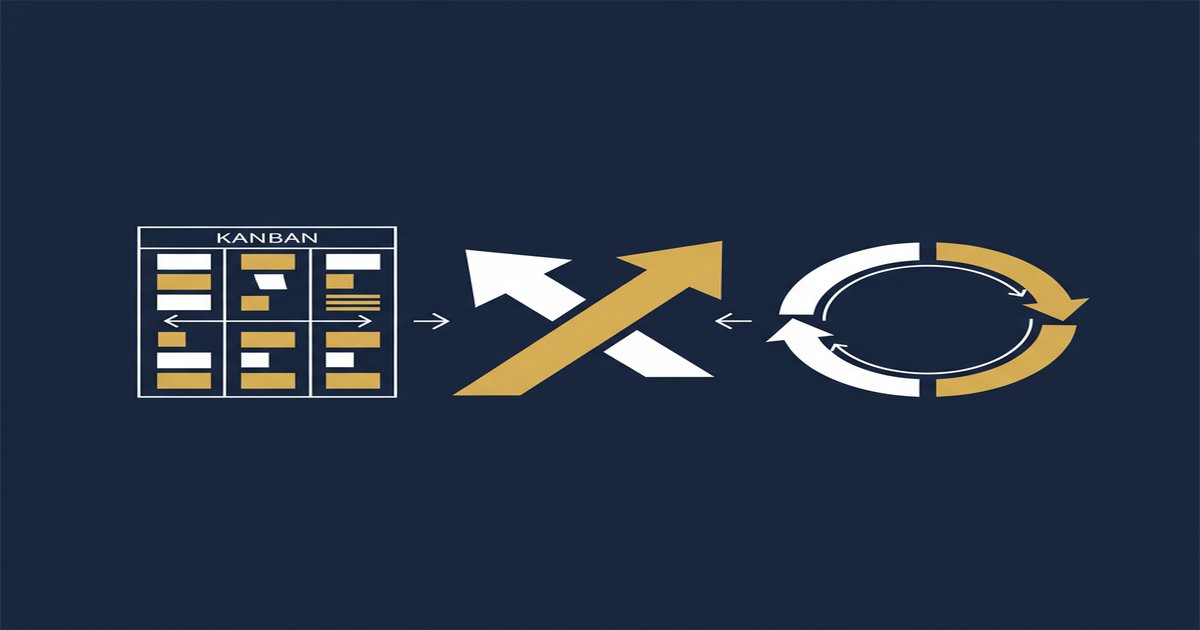
Scrum, with its structured sprints and roles, excels in new product development where learning is key. Kanban optimizes continuous-flow work like IT operations by focusing on limiting work in progress. In 2026, hybrid "Scrumban" models are dominant, with over 60% of agile teams we survey reporting they blend principles from both frameworks to fit their context.
Save 15% on any Instructor-Led Live Online Training course, worldwide, with code HOLIDAYS15. Valid until 31 December 2026, 11:59 pm Pacific Time. See courses and savings
Defining Scrum: The Power of the Sprint
Scrum is a lightweight yet powerful framework designed to generate value through adaptive solutions for complex problems. It is not a methodology with exhaustive instructions. Instead, it provides a structure of roles, events, and artifacts that guide teams in developing and sustaining complex products. The foundational rhythm of Scrum is the Sprint, a fixed-length event of one month or less during which a 'Done', useable, and potentially releasable product Increment is created. We see most mature teams in 2026 operating on two-week Sprints, a cadence that provides rapid feedback loops and frequent opportunities to inspect and adapt.
The framework operates on what we call a '3-5-3' structure. There are three core roles: the Product Owner, who is accountable for maximizing the value of the product resulting from the work of the team; the Scrum Master, who is accountable for establishing Scrum as defined in the Scrum Guide; and the Developers, the cross-functional group of people who create the Increment. This team structure is intentionally non-hierarchical and is designed to optimize flexibility, creativity, and productivity.
Scrum's five formal events are the Sprint itself, Sprint Planning, the Daily Scrum, the Sprint Review, and the Sprint Retrospective. These events create regularity and minimize the need for other meetings. Each event has a specific purpose and timebox, ensuring that the empirical process control pillars of transparency, inspection, and adaptation are brought to life. The three artifacts - the Product Backlog, the Sprint Backlog, and the Increment - represent work or value. They provide transparency and opportunities for inspection and adaptation, ensuring every team member and stakeholder shares the same understanding of the work and its progress.
Kanban vs Scrum: at-a-glance comparison
Same Agile family, very different mechanics. Pick by workflow type, not popularity.
| Dimension | Scrum | Kanban |
|---|---|---|
| Cadence | Fixed sprints (1 to 4 weeks) | Continuous flow |
| Roles | Scrum Master, PO, Developers | No prescribed roles |
| Core metric | Velocity, sprint goal | Lead time, WIP, throughput |
| Change mid-cycle | Discouraged during sprint | Allowed anytime |
| Best for | New products, discovery, cross-functional teams | Ops, support, maintenance, steady demand |
| Certification path | PSM, CSM, PSPO, CSPO | PSK, KMP I / II, TKP |
Defining Kanban: The Science of Continuous Flow
In stark contrast to Scrum's timeboxed sprints, Kanban is a method for managing knowledge work with an emphasis on just-in-time delivery while not overloading the team members. Where Scrum prescribes a specific cadence, Kanban is a continuous flow model. The primary goal is to optimize the flow of value from idea to customer by visualizing the workflow, limiting Work in Progress (WIP), and measuring the end-to-end process. It is a pull system: work is pulled into the system only when capacity is available, rather than being pushed in according to a plan.
Kanban has no prescribed roles or required meetings. It starts with your existing process and stimulates continuous, incremental, and evolutionary change. The core practices are simple but profound: visualize the workflow on a Kanban board, limit WIP for each stage of the workflow, manage flow by spotting and resolving bottlenecks, make process policies explicit, and use models to recognize and implement improvement opportunities. This data-driven approach appeals to teams that are focused on service delivery excellence and predictability.
Our data from training hundreds of operations teams shows that the single most impactful a-ha moment is the implementation of WIP limits. An IT support team we certified in 2025, for instance, had an average of 15 active tickets per engineer. By implementing a WIP limit of three active tickets, their average resolution time for critical incidents dropped by 40% within two months. This is because Kanban forces teams to focus on finishing work, not just starting it. It exposes system bottlenecks and encourages collaboration to resolve them, creating a smoother, faster, and more predictable delivery system.
The Core Philosophical Divide: Empiricism vs. Flow
The fundamental difference between Scrum and Kanban lies in their underlying philosophies for process improvement. Scrum is founded on empirical process control. The theory asserts that knowledge comes from experience and making decisions based on what is known. Scrum employs an iterative, incremental approach to optimize predictability and control risk. The fixed-length Sprints, regular events, and defined roles create a container for inspection and adaptation. Every Sprint Review and Retrospective is a formal opportunity to empirically assess the product increment and the team's process, then adjust the plan for the next Sprint. This makes Scrum a powerful engine for learning and navigating high-uncertainty environments.
Kanban, conversely, is built on the principles of flow optimization, drawing from lean manufacturing and queuing theory. It does not prescribe iterations. Instead, it focuses on creating a smooth, predictable flow of work from start to finish. The primary goals are to increase throughput (the amount of work completed per unit of time) and decrease lead time (the total time from request to delivery). Kanban achieves this by making the entire process visible and actively managing the amount of work in progress. It is a system designed for stability and efficiency, using metrics like Cycle Time and Throughput to scientifically identify and eliminate delays and waste in the system.
Ultimately, the choice reflects your primary goal. Is your biggest challenge navigating the unknown and validating hypotheses about a new product? Scrum's empirical, timeboxed approach provides the structure for that discovery. Is your main challenge delivering a steady stream of work predictably and efficiently for an existing service or system? Kanban's flow-based model provides the tools to optimize that delivery system. Many teams find they need a bit of both, leading to the rise of hybrid approaches.
When Scrum Wins: Building New Capabilities
Scrum excels in environments of high uncertainty, making it the dominant framework for new product development, complex software engineering, and research-oriented projects. When you are building something novel, the requirements are not fully understood at the outset. Scrum's iterative nature allows the team to build a small piece of the product, get feedback from stakeholders during the Sprint Review, and adapt the plan accordingly. This inspect-and-adapt loop is critical for mitigating risk and ensuring the final product actually meets market needs.
The framework's prescribed roles and events create a strong container for team formation and collaboration, particularly for newly formed teams or those with complex dependencies across an organization. A classic example comes from one of our FinTech cohorts in 2025. A major bank tasked a new team with building a mobile-first investment platform. The team was composed of members from three different directorates who had never worked together. By adopting Scrum, the enforced daily synchronization via the Daily Scrum and the clear accountability of the Product Owner and Scrum Master roles helped them gel into a high-performing unit within three months, successfully launching a beta product two Sprints ahead of the initial roadmap.
Scrum's cadence is also invaluable for synchronizing with other parts of the organization. The predictable rhythm of two-week Sprints allows marketing, sales, and leadership teams to align their activities with the development team's output. A Sprint Review becomes a powerful alignment event where business stakeholders see tangible progress and provide direct input, ensuring the development effort remains tightly coupled with business strategy. This predictable cadence makes planning marketing campaigns, sales training, and budget reviews far more effective.
When Kanban Wins: Optimizing Stable Systems
Kanban finds its sweet spot in environments where work is more continuous and priorities can shift unpredictably. This makes it the ideal framework for IT operations, customer support, infrastructure management, and production maintenance teams. These teams are not typically building a single new product from scratch; they are managing a continuous flow of incoming requests, tickets, or tasks. Scrum's fixed-sprint commitment is often impractical when a high-severity production issue can arrive at any moment and must be addressed immediately.
The power of Kanban in these contexts lies in its ability to bring order to chaos. By visualizing the workflow on a board, all work becomes transparent. Implementing WIP limits prevents team members from being overwhelmed and encourages them to collaborate on finishing existing tasks before pulling new ones. We worked with a large e-commerce retailer's infrastructure team that was struggling with burnout and long resolution times. By introducing a simple three-stage Kanban system (To Do, In Progress, Done) with WIP limits, they were able to reduce their average Cycle Time for server patching requests from 12 days to just 3 days in 2026. This also improved team morale, as engineers felt in control of their work rather than constantly context-switching.
Kanban's focus on flow metrics also resonates with data-driven operational teams. Leaders can track Throughput (number of items finished per week), Lead Time, and Cycle Time to make the system's performance predictable. Using a Cumulative Flow Diagram (CFD), a manager can see the stability of the process and forecast completion times with a high degree of statistical confidence. This is impossible in a chaotic, interrupt-driven system. Kanban provides the tools to move from reactive firefighting to a proactive, predictable service delivery model.
The Rise of Scrumban: A Pragmatic Hybrid
In 2026, the debate is less about 'Scrum versus Kanban' and more about 'how do we combine them effectively?' The answer for a growing majority of teams is Scrumban. Our internal surveys of alumni show that over 60% of agile teams now use a hybrid model, borrowing elements from both frameworks to create a process that fits their specific context. Scrumban is not a formal, prescriptive framework but rather a pragmatic fusion of Scrum's structure with Kanban's flow-based improvements.
A common Scrumban pattern involves a team that maintains Scrum's roles (Product Owner, Scrum Master, Developers) and its regular cadence of events like Sprint Planning and Retrospectives. However, within the Sprint, they use a Kanban board with explicit WIP limits to manage their workflow. They move away from estimating tasks in story points and committing to a fixed scope for the Sprint. Instead, they pull high-priority items from the Sprint Backlog as they have the capacity, focusing on reducing Cycle Time and optimizing flow throughout the Sprint. This approach provides the macro-level structure of Scrum with the micro-level efficiency of Kanban.
A marketing team from a global CPG brand we worked with provides a perfect case study. They found two-week Sprints helpful for planning campaign launches. However, their work also included a high volume of unpredictable requests (e.g., social media responses, minor web updates). They adopted a Scrumban approach. They used a Sprint to focus on a major campaign goal but reserved a specific capacity lane on their Kanban board, with a strict WIP limit, for unplanned work. This allowed them to remain responsive to daily business needs without derailing their larger strategic projects, providing the best of both worlds.
Comparing Key Metrics: Velocity vs. Throughput
How you measure success and predictability differs significantly between the two frameworks. In Scrum, the primary metric for long-range forecasting is Velocity. Velocity is a measure of the amount of work a Development Team can tackle during a single Sprint and is a key input to Sprint Planning. It is typically calculated by summing the story points of all 'Done' Product Backlog Items at the end of a Sprint. For example, if a team completes 25, 28, and 22 points in three consecutive Sprints, their average Velocity is 25. This number helps the Product Owner forecast how many Sprints might be required to complete a certain feature set in the Product Backlog. However, Velocity is an internal metric for the team's planning and should never be used to compare the performance of different teams.
Kanban uses a different set of metrics focused on flow. The most important are:
These flow metrics provide a powerful, data-driven way to understand and improve the delivery system. A Kanban team can look at their Lead Time distribution and state with 85% confidence, for example, that any new high-priority item will be delivered in 8 days or less. This level of predictability is the holy grail for service delivery teams and is a core outcome of a mature Kanban implementation.
- **Lead Time:** The total time a work item takes from the moment it is requested until it is delivered to the customer.
- **Cycle Time:** A subset of Lead Time, typically measuring the time from when work begins on an item until it is delivered. Improving Cycle Time is a key focus for the team.
- **Throughput:** The number of work items completed per unit of time (e.g., per day or per week). This is a measure of the system's processing capability.
Tooling and Team Maturity
Modern digital project management tools have evolved to be framework-agnostic, providing robust support for whichever way of working you choose. Platforms like Jira, Azure DevOps, and Trello are not inherently Scrum or Kanban tools; they are highly configurable systems that can be tailored to either framework. For a Scrum team, you can set up Sprints, manage a backlog with story points, and generate burndown charts to track progress toward the Sprint Goal. A burndown chart visually represents the work remaining versus the time, providing a quick check on whether the team is on track.
For a Kanban team, the same tool can be configured differently. You would set up a board that maps to your workflow stages and, most critically, configure WIP limits for the 'in-progress' columns. The tool will then prevent users from pulling new work into a column that is already at its limit, enforcing the core principle of Kanban. These tools also automatically generate the key flow metric charts, such as the Cumulative Flow Diagram (CFD), Cycle Time scatterplots, and Throughput histograms. These charts are essential for a Kanban team's continuous improvement efforts.
Beyond tooling, team maturity looks different in each system. A mature Scrum team consistently delivers a 'Done', valuable Increment every Sprint. Their Sprint Reviews are focused on product strategy, and their Retrospectives lead to concrete process improvements. They have a stable Velocity and can forecast releases reliably. A mature Kanban team, on the other hand, is identified by the predictability of its delivery system. They have stable, low Lead Times and a high Throughput. They use their flow metrics to identify bottlenecks and make data-driven decisions to improve their process. The team's conversations shift from 'are we busy?' to 'how can we deliver value faster?'
Your First Certification: Mapping Your 2026 Career Path
For professionals looking to enter or advance in an agile career in 2026, certification remains a critical differentiator. The path you choose should align with the types of teams and companies you want to work for. If your goal is to work in product development, software innovation, or in companies that are in the early stages of their agile transformation, Scrum certifications are your best entry point. The two most recognized are the Certified ScrumMaster (CSM) from Scrum Alliance and the Professional Scrum Master (PSM I) from Scrum.org. A certified Scrum Master in North America can expect a salary in the range of $115,000 to $135,000 USD, with demand remaining exceptionally high.
If you are targeting a career in IT operations, service delivery, business process improvement, or a mature agile organization focused on efficiency, Kanban certifications are increasingly valuable. The Kanban University offers the Kanban Management Professional (KMP) credential, which is a combination of two courses: Kanban System Design (KSD) and Kanban Systems Improvement (KSI). ProKanban.org offers the Professional Kanban (PK) series of certifications. These credentials signal a deep understanding of flow metrics and systems thinking. Professionals with a KMP certification often take on roles as Flow Managers, Agile Coaches, or Service Delivery Managers, with salaries comparable to Scrum Masters, often in the $120,000 to $140,000 USD range for those with demonstrated experience in optimizing flow.
So, which should you learn first? For the vast majority of professionals, we recommend starting with a Scrum certification like the CSM or PSM. Because Scrum is a more prescriptive and widely adopted starting point for agile, the market demand for Scrum roles is currently higher, providing more entry-level opportunities. It teaches the fundamentals of the agile mindset, iterative development, and team dynamics. Once you have a solid foundation in Scrum, pursuing a Kanban certification becomes a powerful second step. It adds sophisticated flow management techniques to your toolkit, making you a versatile and highly valuable candidate capable of leading teams in any context, including the increasingly common Scrumban environment.
Talk to a senior counsellor about cohorts, instalments and a plan tailored to your background and timeline.
Frequently asked questions
Can I use both Scrum and Kanban?
Absolutely. Using them together is known as 'Scrumban' and is becoming the most common approach in 2026. Teams often use Scrum's roles and events for structure and cadence, while applying Kanban's WIP limits and flow principles within the Sprint to improve efficiency and responsiveness. This hybrid allows you to tailor a process that fits your team's specific needs.
What exactly is Scrumban?
Scrumban is a hybrid model that combines the structure of Scrum with the flow-based principles of Kanban. A typical Scrumban team might use Sprints and Scrum roles but manage their work on a Kanban board with WIP limits instead of committing to a fixed sprint backlog. This approach allows for planning and reflection while maintaining the flexibility to pull work on demand, making it ideal for teams with both planned project work and unpredictable tasks.
Which framework is easier to adopt for a new team?
Scrum is generally easier for a new or immature team to adopt. Its prescriptive nature with defined roles, events, and a clear cadence provides a strong scaffold that helps a team learn agile principles and develop discipline. Kanban
Is Kanban or Scrum better for maintenance teams?
Kanban is almost always the better choice for pure maintenance, operations, or support teams. The work of these teams is typically a continuous flow of incoming tickets and requests with varying priorities. Kanban's pull system and focus on limiting work in progress are designed to handle this unpredictability and optimize for a fast, smooth resolution of tasks, whereas Scrum's fixed Sprint commitment can be disruptive.
Which is 'more' agile?
Neither is 'more' agile. Both are methods for implementing agile principles, but they emphasize different aspects. Scrum emphasizes iterative development and empirical learning through inspection and adaptation. Kanban emphasizes flow, continuous improvement, and the elimination of waste. The most agile approach is the one that best enables a team to deliver value to its customers and adapt to change in its specific context.
Do I really need a certification to use Kanban?
While you can certainly apply Kanban's basic principles without a certification, formal training is highly valuable. Certifications like the Kanban Management Professional (KMP) teach you the deeper science behind flow, queuing theory, and systems thinking. This knowledge allows you to effectively diagnose bottlenecks, interpret flow metrics, and lead meaningful, data-driven improvements that go far beyond just putting sticky notes on a wall.
Recommended courses
Hand picked for readers of this article.
Ready to make this credential yours?
Talk to a senior counsellor about cohorts, instalments and a study plan tailored to your background.
Continue reading
More in Agile & Scrum
Recommended blogs from the same category.
Scrum Master vs Product Owner in 2026: Which Career Path Pays Better and Suits You
In 2026 Product Owner roles pay 12 to 22 percent more than Scrum Master roles at every career stage globally, but Scrum Master roles are 1.6 times more numerous. Median PO base is USD 132K in the US and INR 22L in India. Median SM base is USD 112K in the US and INR 18L in India. PO career ceiling is Head of Product or CPO. SM career ceiling is Agile Coach, Head of Agility or Transformation Lead. PO suits people who love outcomes, customer discovery and prioritisation trade offs. SM suits people who love team dynamics, unblocking and coaching. Start with CSM or PSM 1 if drifting into SM, CSPO or PSPO 1 if drifting into PO. Career pivots between the two are common through year 5.
SAFe vs LeSS in 2026: Which Scaling Framework Fits Your Enterprise
SAFe (Scaled Agile Framework) is the market leader by adoption (roughly 32 percent of scaling enterprises in 2026) with a heavy prescriptive structure of ARTs, PI Planning, RTEs and portfolio Kanban. LeSS (Large Scale Scrum) holds around 7 percent adoption, keeps single team Scrum roles and adds minimal structure. SAFe is the pragmatic choice for regulated, project centric and PMO heavy enterprises. LeSS is the candid choice for genuinely product organised firms with strong Scrum maturity. SAFe SPC costs USD 3,995, LeSS Practitioner costs USD 1,800 to USD 2,400. Neither fixes broken culture, framework is 20 percent of a transformation, coaching and org design is 80 percent.
Scrum Master Career Path in 2026: From CSM to Enterprise Coach
The Scrum Master career path in 2026 runs Scrum Master to Senior SM to Agile Coach to Enterprise Agile Coach or Head of Agile. Median jump between rungs is 2 to 4 years. Entry SM salaries start at USD 78,000 US and INR 10 lakh India metros. Senior SM lands at USD 118,000 / INR 20 lakh with CSM plus PSM II or A-CSM. Agile Coach peaks at USD 155,000 / INR 32 lakh with CTC or ICE-AC. Enterprise Coach reaches USD 185,000+ / INR 45 lakh+. The candid rule: earn CSM in year 1, A-CSM or PSM II in year 3, coaching certification by year 5, or growth stalls at Senior SM.
PMI-ACP vs SAFe Agilist in 2026: Which Agile Certification for Which Career
PMI-ACP is the framework agnostic agile practitioner credential from PMI: 120 questions in 3 hours, USD 495 (member) or USD 435 (non member correction: member USD 435, non member USD 495), 21 contact hours required, 8 months of agile experience in the last 3 years. SAFe Agilist (SA) is the entry certification for the Scaled Agile Framework: 45 questions in 90 minutes, USD 995 course fee (exam included), no prerequisite. Take PMI-ACP if you coach teams across multiple frameworks or work in consulting. Take SAFe Agilist if your employer runs SAFe (which is the dominant enterprise scaling framework in 2026 with roughly 40 percent share). Neither is universally better; hiring signal is entirely employer specific.
Product Backlog vs Sprint Backlog in 2026: Ownership, Content and Common Mistakes
The Product Backlog is the single, ordered, evolving list of everything that might be worth doing to the product. The Product Owner owns it. The Sprint Backlog is the subset of Product Backlog items the Developers select for a single Sprint plus the plan for delivering them and the Sprint Goal. The Developers own it. In 2026 the most common failure pattern is a Product Backlog treated as a task list and a Sprint Backlog treated as a status report. Healthy teams refine the Product Backlog continuously, keep the top 10 to 15 items ready, and re-plan the Sprint Backlog daily as understanding improves.
Scrum Master vs Project Manager in 2026: Roles, Skills, Salary and Which Path to Choose
A Scrum Master is accountable for the effectiveness of one Scrum Team, coaches on Scrum, removes impediments and protects the Sprint. A Project Manager is accountable for delivering a defined outcome inside scope, schedule and cost across one or more teams, using predictive, agile or hybrid delivery. In 2026 both roles are healthy in the market but they optimise for different things. Scrum Masters carry CSM, PSM or SAFe SM credentials and earn USD 108,000 to 135,000 in the US. Project Managers carry PMP, PRINCE2 or PMI-ACP and earn USD 118,000 to 155,000. Pick Scrum Master if you love team coaching and delivery flow. Pick Project Manager if you love outcome accountability, stakeholder management and cross-team delivery.
Latest from the blog
The freshest posts published across every category.
PRINCE2 Foundation and Practitioner Live Online Training: UK, Europe, Canada, Australia, New Zealand and GCC, HOLIDAYS15 for Live Online Only
Choose PRINCE2 Foundation and Practitioner together to move from understanding the method to applying and tailoring it. Learners Ink provides 32 contact hours over four training days through Instructor-Led Live Online Training, also called Instructor-led Live Virtual Training or a Live Virtual Class. UK fees are GBP 1,399 early bird / GBP 1,799 standard; with HOLIDAYS15, pay GBP 1,189.15 / GBP 1,529.15. Eligible EUR-market fees are EUR 1,399 / EUR 1,799 with the same numerical discounted amounts in EUR. Canada, Australia, New Zealand and GCC fees are shown separately below. HOLIDAYS15 is Live Online only until 31 December 2026, 11:59pm Pacific Time, never Classroom or e-learning. Compare local fees, use the budget and study calculators, download free Foundation and Practitioner practice tests, then select a cohort to Buy Now or Enquire Now.
PRINCE2 Foundation and Practitioner Classroom Training in Cambridge, UK: October to December 2026 Cohorts
Learners Ink offers PRINCE2 7 Foundation and Practitioner Certification Training in Cambridge, United Kingdom, through in-person Classroom and Instructor-Led Live Online Training. The combined programme covers 32 contact hours over four training days. UK Classroom fees are £2,599 early bird and £2,999 standard. The October Classroom intensive is scheduled for 27 to 30 October 2026, subject to the existing booking cutoff and availability; November and December offer weekday and weekend options. Review the current cohort table before buying. HOLIDAYS15 applies to Live Online only, never Classroom.
PMI-CPMAI Live Online Training USA 2026: USD 1,999 Early Bird With Exam Voucher, USD 1,699.15 With HOLIDAYS15
Every US PMI-CPMAI Live Online fee now includes the official PMI-CPMAI exam voucher and PMI's mandatory 21-hour self-paced Exam Prep Course with learning materials. The early bird fee is USD 1,999 with the exam voucher, and the standard fee is USD 2,199 with the exam voucher. Enter HOLIDAYS15 at checkout and the early bird comes to USD 1,699.15, still including the exam voucher, until 31 December 2026, 11:59pm Pacific Time. You get 24 contact hours of live, instructor-led training on the six-phase CPMAI methodology from anywhere in the United States, with no sales tax added. [See dates and book your seat](https://www.learnersink.com/project-management/pmi-cpmai-certification-training-online-training-new-york-ny-usa).
PMI-CPMAI Classroom Training USA 2026: USD 2,999 Early Bird With Exam Voucher Included
US PMI-CPMAI Classroom training is USD 2,999 early bird and USD 3,199 standard, and both fees include the official PMI-CPMAI exam voucher and PMI's mandatory 21-hour self-paced Exam Prep Course with learning materials. You get 24 contact hours face to face with a senior AI project trainer, working through the six CPMAI phases on real cases with peers from your city. No sales tax is added. HOLIDAYS15 does not apply to Classroom; if you want the holiday discount, Live Online is USD 1,699.15 with the voucher until 31 December 2026, 11:59pm Pacific Time. [See Classroom dates](https://www.learnersink.com/project-management/pmi-cpmai-certification-training-course-new-york-ny-usa).
Machine Learning Training USA 2026: Live Online USD 1,099, Classroom USD 1,999, HOLIDAYS15 for Live Online Only
Machine Learning Certification Training in the USA is USD 1,099 early bird for Live Online and USD 1,999 early bird for Classroom. Standard fees are USD 1,399 and USD 2,399. With HOLIDAYS15, Live Online drops to USD 934.15 until 31 December 2026, 11:59pm Pacific Time. You get 50 contact hours of hands-on, instructor-led training in Python, scikit-learn, supervised and unsupervised learning, model evaluation and an intro to deep learning, finished with a capstone project. [See Live Online dates](https://www.learnersink.com/data-ai/machine-learning-certification-training-online-training-new-york-ny-usa).
Project Management Techniques (PMT): Practical Course Guide, Syllabus and Booking
Project Management Techniques (PMT) is a practical Learners Ink workshop for people who need to plan, estimate, monitor and deliver projects more confidently. The programme lists 8 contact hours and covers charter and scope, estimation, critical path scheduling, earned value, risk, stakeholders, quality and agile or hybrid techniques. Choose instructor-led Classroom or Live Online training, check the current fee and dates for your location, and earn a Learners Ink Certificate of Completion after passing the assessment. This is skills training, not the PMP or PRINCE2 certification exam.
Search the blog
Full search and filters: category, year, month, exact date, course, topic, hashtag and long-form.
PRINCE2 Foundation and Practitioner Live Online Training: UK, Europe, Canada, Australia, New Zealand and GCC, HOLIDAYS15 for Live Online Only
Choose PRINCE2 Foundation and Practitioner together to move from understanding the method to applying and tailoring it. Learners Ink provides 32 contact hours over four training days through Instructor-Led Live Online Training, also called Instructor-led Live Virtual Training or a Live Virtual Class. UK fees are GBP 1,399 early bird / GBP 1,799 standard; with HOLIDAYS15, pay GBP 1,189.15 / GBP 1,529.15. Eligible EUR-market fees are EUR 1,399 / EUR 1,799 with the same numerical discounted amounts in EUR. Canada, Australia, New Zealand and GCC fees are shown separately below. HOLIDAYS15 is Live Online only until 31 December 2026, 11:59pm Pacific Time, never Classroom or e-learning. Compare local fees, use the budget and study calculators, download free Foundation and Practitioner practice tests, then select a cohort to Buy Now or Enquire Now.
PRINCE2 Foundation and Practitioner Classroom Training in Cambridge, UK: October to December 2026 Cohorts
Learners Ink offers PRINCE2 7 Foundation and Practitioner Certification Training in Cambridge, United Kingdom, through in-person Classroom and Instructor-Led Live Online Training. The combined programme covers 32 contact hours over four training days. UK Classroom fees are £2,599 early bird and £2,999 standard. The October Classroom intensive is scheduled for 27 to 30 October 2026, subject to the existing booking cutoff and availability; November and December offer weekday and weekend options. Review the current cohort table before buying. HOLIDAYS15 applies to Live Online only, never Classroom.
PMI-CPMAI Live Online Training USA 2026: USD 1,999 Early Bird With Exam Voucher, USD 1,699.15 With HOLIDAYS15
Every US PMI-CPMAI Live Online fee now includes the official PMI-CPMAI exam voucher and PMI's mandatory 21-hour self-paced Exam Prep Course with learning materials. The early bird fee is USD 1,999 with the exam voucher, and the standard fee is USD 2,199 with the exam voucher. Enter HOLIDAYS15 at checkout and the early bird comes to USD 1,699.15, still including the exam voucher, until 31 December 2026, 11:59pm Pacific Time. You get 24 contact hours of live, instructor-led training on the six-phase CPMAI methodology from anywhere in the United States, with no sales tax added. [See dates and book your seat](https://www.learnersink.com/project-management/pmi-cpmai-certification-training-online-training-new-york-ny-usa).
PMI-CPMAI Classroom Training USA 2026: USD 2,999 Early Bird With Exam Voucher Included
US PMI-CPMAI Classroom training is USD 2,999 early bird and USD 3,199 standard, and both fees include the official PMI-CPMAI exam voucher and PMI's mandatory 21-hour self-paced Exam Prep Course with learning materials. You get 24 contact hours face to face with a senior AI project trainer, working through the six CPMAI phases on real cases with peers from your city. No sales tax is added. HOLIDAYS15 does not apply to Classroom; if you want the holiday discount, Live Online is USD 1,699.15 with the voucher until 31 December 2026, 11:59pm Pacific Time. [See Classroom dates](https://www.learnersink.com/project-management/pmi-cpmai-certification-training-course-new-york-ny-usa).
Machine Learning Training USA 2026: Live Online USD 1,099, Classroom USD 1,999, HOLIDAYS15 for Live Online Only
Machine Learning Certification Training in the USA is USD 1,099 early bird for Live Online and USD 1,999 early bird for Classroom. Standard fees are USD 1,399 and USD 2,399. With HOLIDAYS15, Live Online drops to USD 934.15 until 31 December 2026, 11:59pm Pacific Time. You get 50 contact hours of hands-on, instructor-led training in Python, scikit-learn, supervised and unsupervised learning, model evaluation and an intro to deep learning, finished with a capstone project. [See Live Online dates](https://www.learnersink.com/data-ai/machine-learning-certification-training-online-training-new-york-ny-usa).
Project Management Techniques (PMT): Practical Course Guide, Syllabus and Booking
Project Management Techniques (PMT) is a practical Learners Ink workshop for people who need to plan, estimate, monitor and deliver projects more confidently. The programme lists 8 contact hours and covers charter and scope, estimation, critical path scheduling, earned value, risk, stakeholders, quality and agile or hybrid techniques. Choose instructor-led Classroom or Live Online training, check the current fee and dates for your location, and earn a Learners Ink Certificate of Completion after passing the assessment. This is skills training, not the PMP or PRINCE2 certification exam.
Free PMI-CPMAI Practice Test 2026: Full-Length 120 Question Mock Exam for Managing AI Projects
The free Learners Ink PMI-CPMAI practice test gives you 120 questions in 160 minutes, spread across Foundations and the six CPMAI phases, from business needs and data preparation to testing and operationalization. It is tool agnostic, so it checks how you run an AI project, not which software you know. Download it from the [free PMI-CPMAI practice test page](https://www.learnersink.com/resources/practice-test/pmi-cpmai) and email your answers for a free score report.

Holiday Season Guide
Celebrate with 15% off
Instructor-Led Live Online Training Courses Only
HOLIDAYS15
Worldwide, until 31 December 2026, 11:59 pm Pacific Time
Read the holiday guideFree PgMP Practice Test 2026: Full-Length 170 Question Mock Exam Download, Domains, Timing and How to Use It
The free Learners Ink PgMP practice test is a full-length paper: 170 questions in 240 minutes, weighted across the five PMI domains, with Program Life Cycle Management carrying 44% of the marks. It is written as program level scenarios, so you practise thinking about benefits, governance and many projects at once rather than a single project plan. Download it from the [free PgMP practice test page](https://www.learnersink.com/resources/practice-test/pgmp), sit it in one block, and email your answers for a free score report.
ITIL, MSP and M_o_R E-Learning in 2026: The Complete PeopleCert Course and Free Practice Test Guide
Learners Ink has 33 PeopleCert-accredited self-paced ITIL, MSP and M_o_R courses, with individual purchase pages, 365 days of access, and language editions offered according to country. Every module has a relevant free practice paper except the combined MSP learning option, which uses separate Foundation and Practitioner papers. Download a paper through its free request page, compare the courses below, then buy the appropriate self-paced option at the price shown for your country. The [complete catalogue](https://www.learnersink.com/itil-elearning-courses), [free resources](https://www.learnersink.com/resources) and [course enquiry form](https://www.learnersink.com/enquiry) are available without a classroom booking.
ITIL Self-Paced E-Learning in 2026: Complete Guide to All 33 Accredited ITIL, MSP and M_o_R Courses
Learners Ink, a PeopleCert Accredited Training Organisation (ATO ID 8297), sells 33 self-paced ITIL, MSP and M_o_R e-learning courses: 16 ITIL 4 Practitioner modules, the ITIL 4 Specialist, Strategist and Leader modules, six ITIL Version 5 courses, three MSP 5th Edition options and M_o_R 4 Practitioner. Every course is bought online, starts the same day, includes official courseware, practice questions with rationale and tutor support, and gives 365 days of access. Prices are shown in your local currency, 29 courses have a free full-length practice test, and courses are taught in 12 languages. Start at the [ITIL e-learning catalogue](https://www.learnersink.com/itil-elearning-courses).
PRINCE2 Certification Training in Canada: Classroom and Live Online Guide 2026
PRINCE2 training in Canada is available through Classroom and instructor-led Live Online formats. Compare eligibility, format, city availability and the current CAD fee on the relevant course page before booking.
PRINCE2 Certification Training in Australia: Classroom and Live Online Guide 2026
PRINCE2 training in Australia is available through Classroom and instructor-led Live Online formats. Compare eligibility, format, city availability and the current AUD fee on the relevant course page before booking.
PRINCE2 Certification Training in Belgium: Classroom and Live Online Guide 2026
PRINCE2 training in Belgium is available through Classroom and instructor-led Live Online formats. Compare eligibility, format, city availability and the current EUR fee on the relevant course page before booking.
PRINCE2 Certification Training in Ireland: Classroom and Live Online Guide 2026
PRINCE2 training in Ireland is available through Classroom and instructor-led Live Online formats. Compare eligibility, format, city availability and the current EUR fee on the relevant course page before booking.
PMP Certification Training in Canada: Classroom and Live Online Guide 2026
PMP training in Canada is available through Classroom and instructor-led Live Online formats. Compare eligibility, format, city availability and the current CAD fee on the relevant course page before booking.
PMP Certification Training in Australia: Classroom and Live Online Guide 2026
PMP training in Australia is available through Classroom and instructor-led Live Online formats. Compare eligibility, format, city availability and the current AUD fee on the relevant course page before booking.
PMP Certification Training in Belgium: Classroom and Live Online Guide 2026
PMP training in Belgium is available through Classroom and instructor-led Live Online formats. Compare eligibility, format, city availability and the current EUR fee on the relevant course page before booking.
PMP Certification Training in Ireland: Classroom and Live Online Guide 2026
PMP training in Ireland is available through Classroom and instructor-led Live Online formats. Compare eligibility, format, city availability and the current EUR fee on the relevant course page before booking.
ITIL Self-Paced Online E-Learning Courses in 2026: 33 Accredited Courses Taught in 12 Languages of Instruction
Learners Ink publishes 33 accredited self-paced ITIL, MSP and M_o_R e-learning courses, and they are taught in twelve languages of instruction, not only English. German, French, Spanish, Portuguese, Italian, Dutch, Danish, Norwegian, Polish, Japanese and Chinese editions are live alongside English, and the country catalogue shows the languages offered where you are. Every course carries official PeopleCert courseware, practice questions with rationale, tutor support, 365 days of access and an exam voucher option, priced in your own currency. Start at the [self-paced ITIL e-learning catalogue](https://www.learnersink.com/itil-elearning-courses).
Corporate Training in 2026: The Complete Guide for CXOs, HR and L&D Leaders
Corporate training in 2026 works best as a three mode blend: instructor-led live online for the core cohort (lowest cost per learner, no travel, learners from every office in one room), on-site classroom at your own premises for leadership and intact delivery teams, and self-paced e-learning in 12 languages of instruction for scale and for refreshers. Budget the fully loaded cost, not the invoice: add salary hours, travel and productivity drag. Live online typically lands 35 to 55 percent below on-site for the same certification because travel, venue and downtime disappear. Measure at Kirkpatrick levels 3 and 4, gate the programme on a benefit cost ratio above 1.5, and start every rollout with a free full length practice test so you baseline capability before you spend.
Free ITIL 4 Specialist: Plan, Implement and Control Practice Test for Download: Full Length 60 Question Mock Exam for 2026
ITIL 4 Specialist: Plan, Implement and Control is a 60 question paper sat over 90 minutes with a pass mark of 65% (39 / 60), and the self-paced e-learning route gives you the syllabus without ever testing it under a clock. The Learners Ink free ITIL 4 Specialist: Plan, Implement and Control practice test closes that gap: a full length weighted paper that mirrors the live exam pattern question for question. The download is free, no payment at any stage. When you have sat it, email your answers to info@learnersink.com and a certified trainer sends the complete answer key with a written rationale for every question, plus a free personalised score report that breaks your result down syllabus area by syllabus area so you know exactly what to revise.
Free ITIL 4 Leader: Digital and IT Strategy Practice Test for Download: Full Length 30 Question Mock Exam for 2026
ITIL 4 Leader: Digital and IT Strategy is a 30 question paper sat over 60 minutes with a pass mark of 70% (21 / 30), and the self-paced e-learning route gives you the syllabus without ever testing it under a clock. The Learners Ink free ITIL 4 Leader: Digital and IT Strategy practice test closes that gap: a full length weighted paper that mirrors the live exam pattern question for question. The download is free, no payment at any stage. When you have sat it, email your answers to info@learnersink.com and a certified trainer sends the complete answer key with a written rationale for every question, plus a free personalised score report that breaks your result down syllabus area by syllabus area so you know exactly what to revise.
Free ITIL 4 Specialist: Create, Deliver and Support Practice Test for Download: Full Length 40 Question Mock Exam for 2026
ITIL 4 Specialist: Create, Deliver and Support is a 40 question paper sat over 90 minutes with a pass mark of 70% (28 / 40), and the self-paced e-learning route gives you the syllabus without ever testing it under a clock. The Learners Ink free ITIL 4 Specialist: Create, Deliver and Support practice test closes that gap: a full length weighted paper that mirrors the live exam pattern question for question. The download is free, no payment at any stage. When you have sat it, email your answers to info@learnersink.com and a certified trainer sends the complete answer key with a written rationale for every question, plus a free personalised score report that breaks your result down syllabus area by syllabus area so you know exactly what to revise.
Free ITIL 4 Specialist: Drive Stakeholder Value Practice Test for Download: Full Length 40 Question Mock Exam for 2026
ITIL 4 Specialist: Drive Stakeholder Value is a 40 question paper sat over 90 minutes with a pass mark of 70% (28 / 40), and the self-paced e-learning route gives you the syllabus without ever testing it under a clock. The Learners Ink free ITIL 4 Specialist: Drive Stakeholder Value practice test closes that gap: a full length weighted paper that mirrors the live exam pattern question for question. The download is free, no payment at any stage. When you have sat it, email your answers to info@learnersink.com and a certified trainer sends the complete answer key with a written rationale for every question, plus a free personalised score report that breaks your result down syllabus area by syllabus area so you know exactly what to revise.
Free ITIL 4 Specialist: High-Velocity IT Practice Test for Download: Full Length 40 Question Mock Exam for 2026
ITIL 4 Specialist: High-Velocity IT is a 40 question paper sat over 90 minutes with a pass mark of 70% (28 / 40), and the self-paced e-learning route gives you the syllabus without ever testing it under a clock. The Learners Ink free ITIL 4 Specialist: High-Velocity IT practice test closes that gap: a full length weighted paper that mirrors the live exam pattern question for question. The download is free, no payment at any stage. When you have sat it, email your answers to info@learnersink.com and a certified trainer sends the complete answer key with a written rationale for every question, plus a free personalised score report that breaks your result down syllabus area by syllabus area so you know exactly what to revise.
Free ITIL 4 Strategist: Direct, Plan and Improve Practice Test for Download: Full Length 40 Question Mock Exam for 2026
ITIL 4 Strategist: Direct, Plan and Improve is a 40 question paper sat over 90 minutes with a pass mark of 70% (28 / 40), and the self-paced e-learning route gives you the syllabus without ever testing it under a clock. The Learners Ink free ITIL 4 Strategist: Direct, Plan and Improve practice test closes that gap: a full length weighted paper that mirrors the live exam pattern question for question. The download is free, no payment at any stage. When you have sat it, email your answers to info@learnersink.com and a certified trainer sends the complete answer key with a written rationale for every question, plus a free personalised score report that breaks your result down syllabus area by syllabus area so you know exactly what to revise.
Free ITIL Experience (Version 5) Practice Test for Download: Full Length 40 Question Mock Exam for 2026
ITIL Experience (Version 5) is a 40 question paper sat over 90 minutes with a pass mark of 70% (28 / 40), and the self-paced e-learning route gives you the syllabus without ever testing it under a clock. The Learners Ink free ITIL Experience (Version 5) practice test closes that gap: a full length weighted paper that mirrors the live exam pattern question for question. The download is free, no payment at any stage. When you have sat it, email your answers to info@learnersink.com and a certified trainer sends the complete answer key with a written rationale for every question, plus a free personalised score report that breaks your result down syllabus area by syllabus area so you know exactly what to revise.
Free ITIL Foundation Bridge (Version 5) Practice Test for Download: Full Length 20 Question Mock Exam for 2026
ITIL Foundation Bridge (Version 5) is a 20 question paper sat over 30 minutes with a pass mark of 65% (13 / 20), and the self-paced e-learning route gives you the syllabus without ever testing it under a clock. The Learners Ink free ITIL Foundation Bridge (Version 5) practice test closes that gap: a full length weighted paper that mirrors the live exam pattern question for question. The download is free, no payment at any stage. When you have sat it, email your answers to info@learnersink.com and a certified trainer sends the complete answer key with a written rationale for every question, plus a free personalised score report that breaks your result down syllabus area by syllabus area so you know exactly what to revise.
Free ITIL Product (Version 5) Practice Test for Download: Full Length 40 Question Mock Exam for 2026
ITIL Product (Version 5) is a 40 question paper sat over 90 minutes with a pass mark of 70% (28 / 40), and the self-paced e-learning route gives you the syllabus without ever testing it under a clock. The Learners Ink free ITIL Product (Version 5) practice test closes that gap: a full length weighted paper that mirrors the live exam pattern question for question. The download is free, no payment at any stage. When you have sat it, email your answers to info@learnersink.com and a certified trainer sends the complete answer key with a written rationale for every question, plus a free personalised score report that breaks your result down syllabus area by syllabus area so you know exactly what to revise.