PMP Certification Deep Dive 2026: Scope, Risk and Stakeholder Management for Project Success
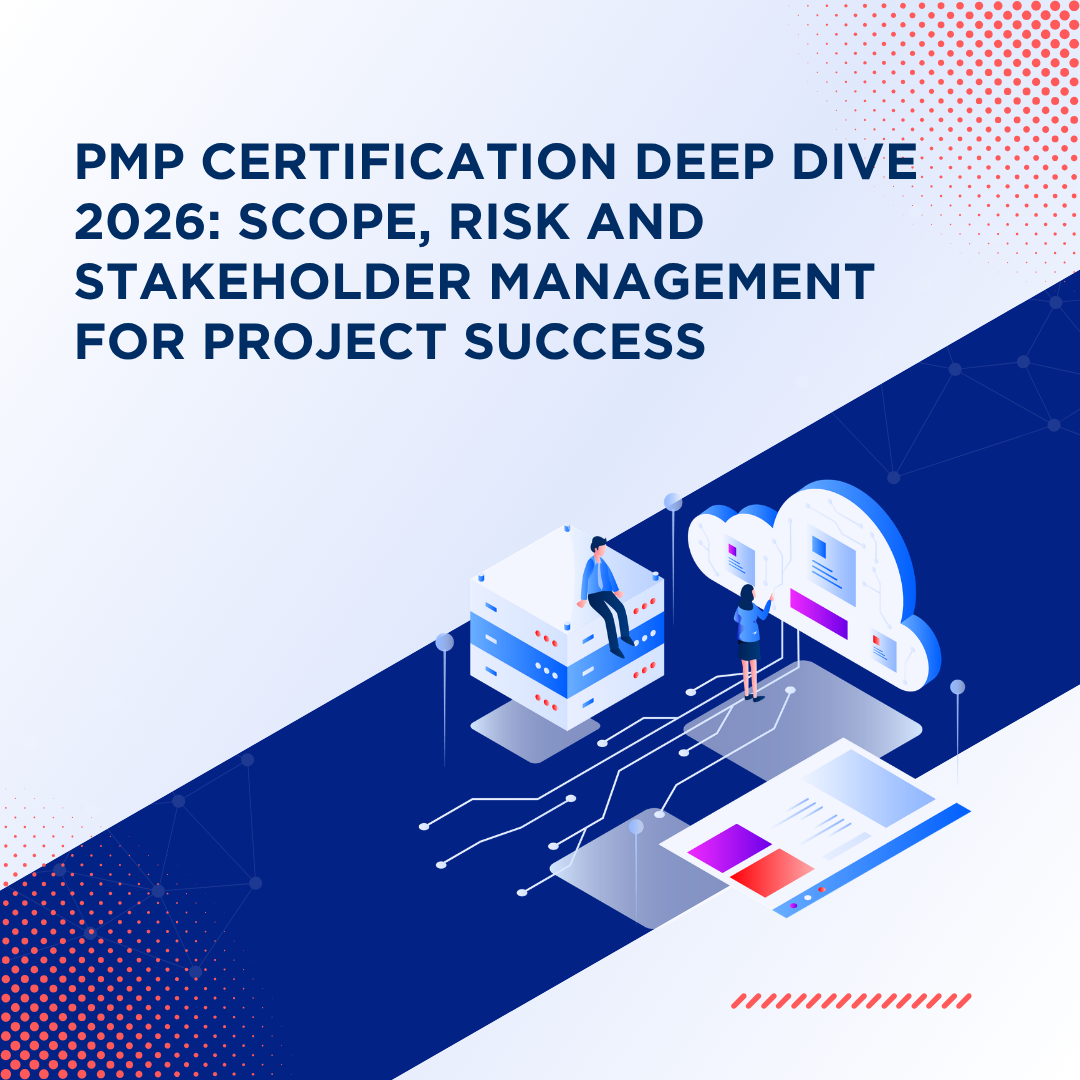
PMP Certification Deep Dive 2026: Scope, Risk and Stakeholder Management for Project Success
Advanced PMP Certification Guide for 2026
Introduction
Project Management Professional certification continues to be the most respected credential for project managers across the world. In today’s complex project environments, success is not defined only by completing tasks but by delivering outcomes that align with business goals. This requires a strong understanding of scope, risk, and stakeholder management.
Modern projects operate in uncertain environments where requirements evolve, risks emerge unexpectedly, and stakeholders have diverse expectations. PMP certification equips professionals with structured frameworks to manage these complexities effectively.
Understanding Scope Management
Scope management is the foundation of successful project execution. It defines what is included in the project and ensures that all stakeholders have a shared understanding of deliverables.
The process begins with defining project objectives and translating them into detailed scope statements. These statements outline deliverables, boundaries, and assumptions.
Without clear scope definition, projects are vulnerable to scope creep, which leads to delays and increased costs.
PMP certification emphasizes structured scope control. Professionals learn how to evaluate change requests, assess their impact, and implement them only when necessary. This ensures that projects remain aligned with objectives while maintaining flexibility.
Risk Management in Dynamic Environments
Risk is inherent in every project. The ability to identify and manage risks proactively is a key differentiator for successful project managers.
PMP certification provides a structured approach to risk management. It involves identifying potential risks, analyzing their probability and impact, and developing mitigation strategies. This process is not a one time activity but continues throughout the project lifecycle.
Effective risk management also involves communication. Stakeholders must be informed about potential risks and the steps being taken to address them. This builds confidence and ensures transparency.
Stakeholder Management as a Strategic Function
Stakeholders influence project success significantly. They include sponsors, team members, clients, and external partners. Each stakeholder has unique expectations and priorities.
PMP certification focuses on stakeholder engagement strategies. Professionals learn how to identify stakeholders, analyze their influence, and develop communication plans. This ensures that stakeholders remain informed and aligned throughout the project.
Managing stakeholder expectations requires strong communication and negotiation skills. PMP certified professionals are trained to handle conflicts, address concerns, and maintain trust.
Integration of Scope, Risk and Stakeholders
One of the strengths of PMP certification is its integrated approach. Scope, risk, and stakeholder management are not treated as separate functions but as interconnected elements of project success.
For example, changes in scope can introduce new risks and impact stakeholder expectations. PMP frameworks help professionals understand these relationships and manage them effectively.
Benefits of PMP Certification
- Strong project management capability
- Global recognition across industries
- Ability to manage complex projects
- Improved leadership and decision making
- High demand in global job markets
Career Opportunities
· Project Manager
· Program Manager
· Portfolio Manager
· Project Consultant
PMP certification provides a comprehensive framework for managing projects with clarity and control. It equips professionals with the skills required to handle complexity, deliver results, and lead teams effectively in modern environments.
Latest posts

Learners Ink 2019 - | All Rights Reserved