Agile Certification Guide 2026: Principles, Frameworks and Real World Application
Agile Certification Guide 2026: Principles, Frameworks and Real World Application
Complete Agile Certification Guide for 2026
Introduction
Agile has transformed the way organizations approach project management, product development, and delivery. In a world where customer expectations evolve rapidly and market conditions change frequently, traditional approaches that rely on rigid planning often fall short. Agile offers a flexible, adaptive model that enables teams to respond quickly while maintaining a strong focus on value delivery.
Agile certification provides professionals with the knowledge and mindset required to operate effectively in such environments. It is not limited to a single framework but encompasses a set of principles and practices that guide teams in delivering outcomes iteratively and continuously.
Understanding Agile Principles
Agile is built on a foundation of principles that emphasize flexibility, collaboration, and customer value. Instead of focusing solely on processes and documentation, Agile prioritizes working solutions and stakeholder engagement.
Key principles include delivering value early and frequently, embracing change even in later stages, and maintaining close collaboration between teams and stakeholders. These principles shift the focus from rigid execution to adaptive delivery.
In practical terms, this means that teams work in short cycles, gather feedback regularly, and make adjustments based on insights. This reduces the risk of delivering solutions that do not meet expectations.
Agile Frameworks and Their Application
Agile is supported by several frameworks that provide structure to its implementation.
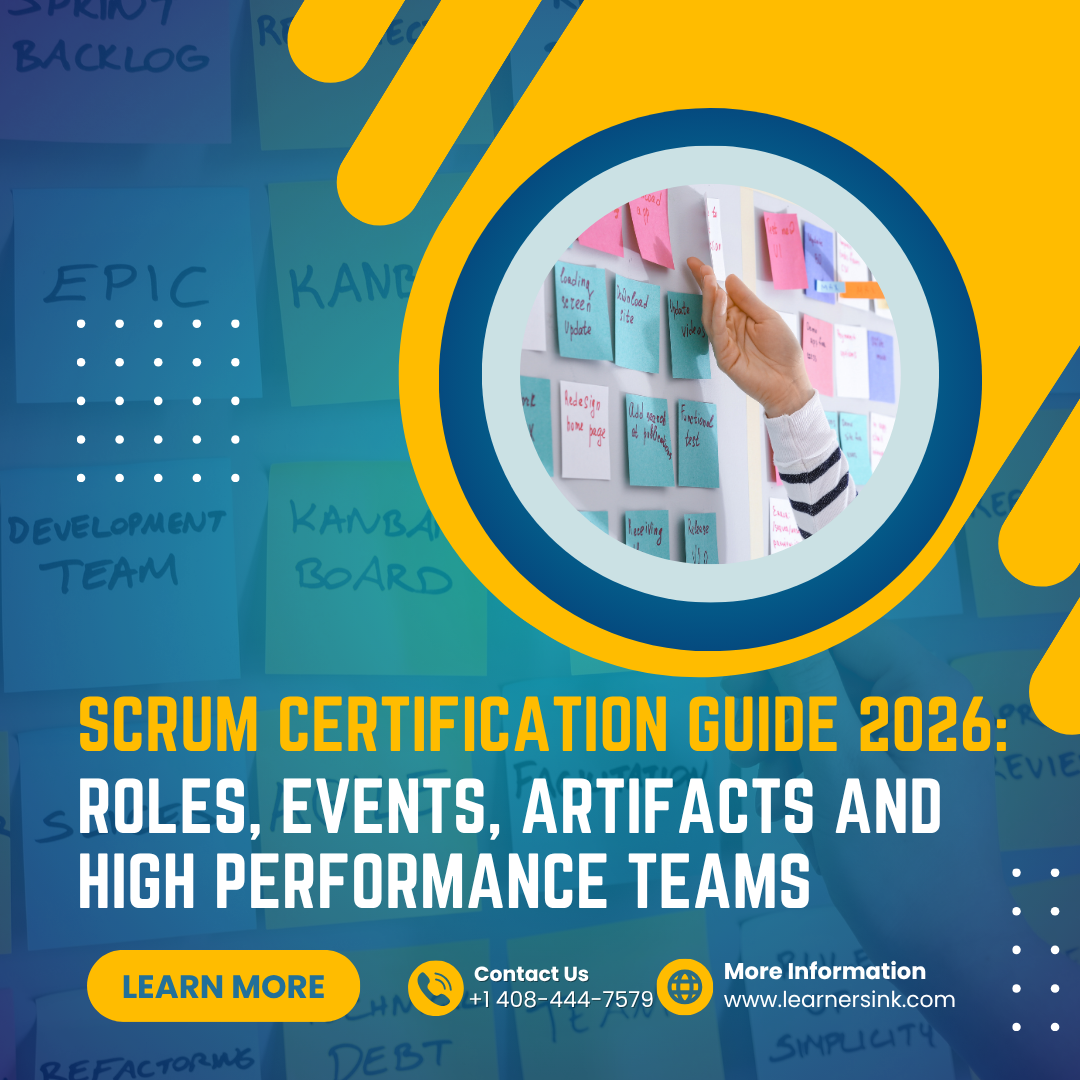
Scrum is one of the most widely used frameworks. It organizes work into time bound cycles and emphasizes roles, events, and artifacts that support iterative delivery.
Kanban focuses on visualizing workflow and managing work in progress. It is particularly effective for teams that require continuous flow rather than fixed cycles.
Lean emphasizes eliminating waste and maximizing value. It encourages teams to focus on efficiency and continuous improvement.
Scaled Agile frameworks are used in large organizations where multiple teams work together on complex initiatives.
Each framework serves a specific purpose, and Agile certification helps professionals understand how to choose and apply the right framework based on context.
Practical Application in Organizations
The true value of Agile lies in its practical application. Organizations use Agile to improve speed, reduce risk, and enhance collaboration.
For example, in product development, Agile enables teams to release features incrementally rather than waiting for a full product launch. This allows for early feedback and continuous improvement.
In service environments, Agile helps teams respond to changing customer needs quickly, ensuring that services remain relevant and effective.
Skills Developed Through Agile Certification
Agile certification develops both technical and behavioral skills.
Professionals learn how to collaborate effectively, communicate clearly, and manage priorities in dynamic environments. They also develop the ability to adapt quickly and make informed decisions.
Benefits of Agile Certification
- Ability to manage changing requirements
- Improved collaboration across teams
- Faster delivery of value
- High demand across industries
- Enhanced problem solving capability
Career Opportunities
· Agile Project Manager
· Scrum Master
· Product Owner
· Agile Coach
Agile certification equips professionals with a mindset and skill set that is essential for modern organizations. It enables them to deliver value consistently while adapting to change, making it a critical capability in today’s business environment.
Latest posts




Learners Ink 2019 - | All Rights Reserved